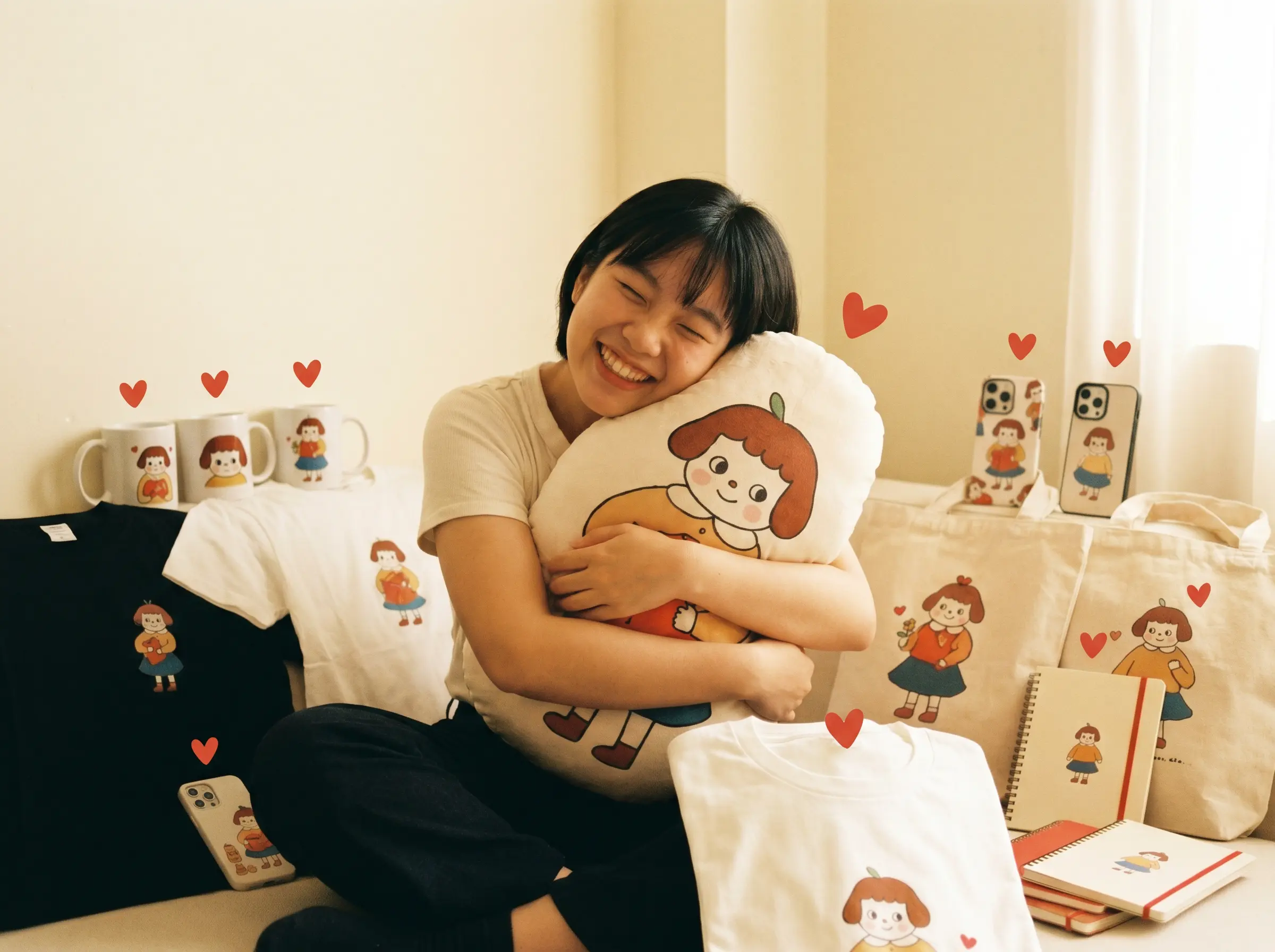
Here's a question that puzzles a lot of creators: Why do some artists sell out their merch drops in minutes, while others struggle to move inventory even with massive followings?
The answer isn't always about having the "best" art. It's about understanding the psychology behind why fans buy artist merch in the first place.
After studying successful creator businesses and interviewing hundreds of fans, I've identified three core psychological drivers that make merch irresistible. And more importantly, I'll show you how to design your product line to tap into these motivations without needing a degree in consumer psychology.
Driver 1. Identity & Belonging ("I Want People to Know I'm Part of This")
When someone buys a T-shirt with your art on it, they're not just buying cotton. They're buying a visible symbol of their identity.
Fans wear merch to signal to the world and, on a deeper level, to themselves:
- "I have good taste."
- "I belong to this community."
- "I support creators who align with my values."
This is why wearable items, like T-shirts, hoodies, tote bags and hats, consistently outperform purely decorative items for new creators. They're identity broadcasters.
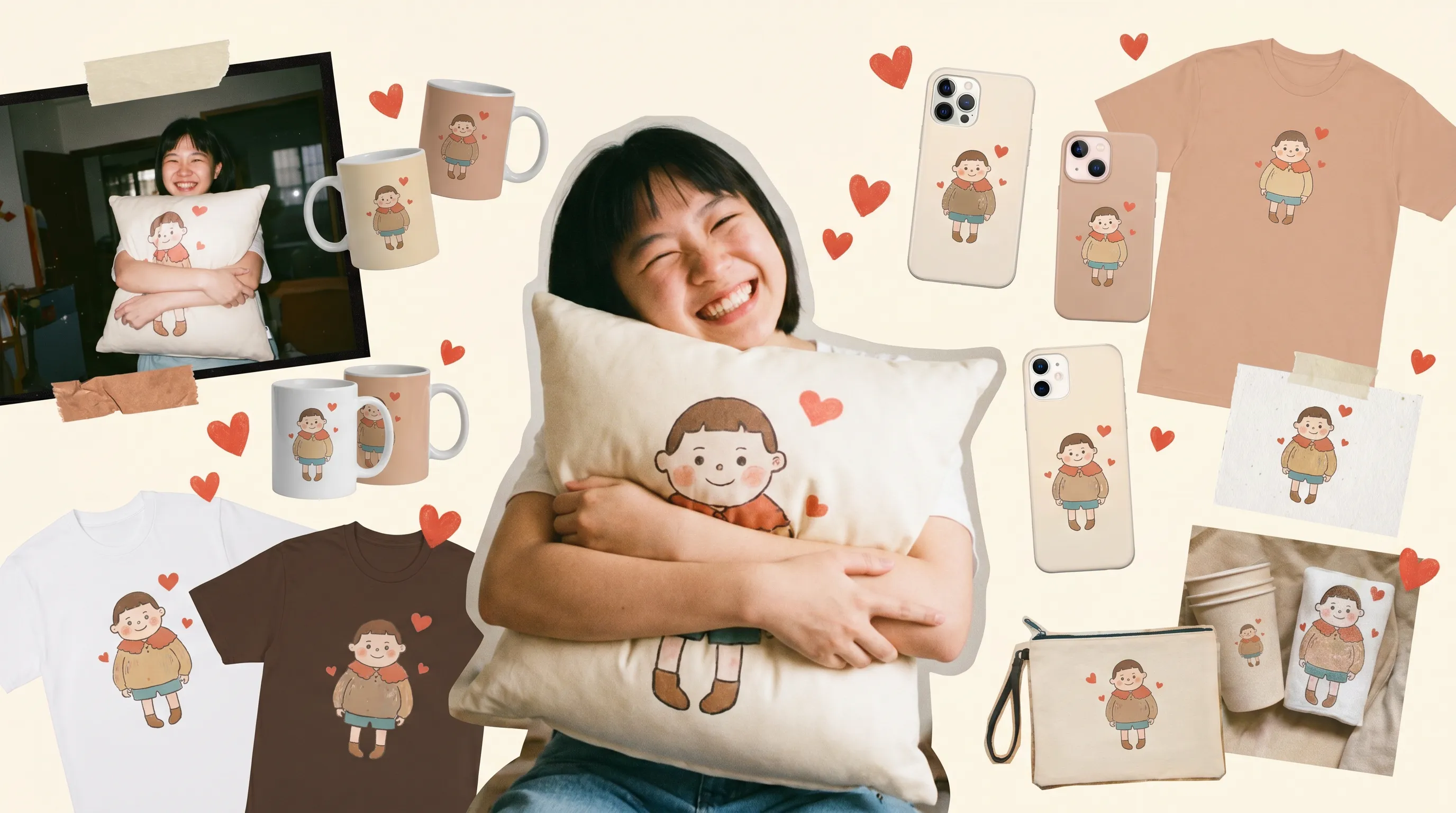
What This Means for Your Product Line:
Don't just offer one T-shirt design and call it a day. Your fans have different comfort levels with self-expression:
- Some want loud, statement pieces (oversized graphic tees).
- Others prefer subtle, "if you know, you know" designs (minimal logo on a hoodie).
- Some just want everyday items that feel like a secret handshake (enamel pins, phone cases).
The more variety you offer, the more identity types you can serve.
Here's where automation helps. Platforms like Genki solve the "variety problem" beautifully. Instead of manually formatting your art for 10 different products, which can take days, you upload your IP image once, and the smart automated formatting adapts designs across hundreds of items. Hoodies, mugs, phone cases, tote bags, you name it. This means you can offer that critical variety without the design labor.
Driver 2: Daily Utility ("I Want to Use Something I Love Every Day")
There's a special emotional attachment that happens when fans interact with your art during their daily routines.
A fan who drinks their morning coffee from your mug? They're starting every day with your work. Someone who uses your art as their phone case? They're looking at it 100+ times per day.
This is why functional merch often has higher repeat purchase rates than posters. Utility creates habit, and habit creates loyalty.
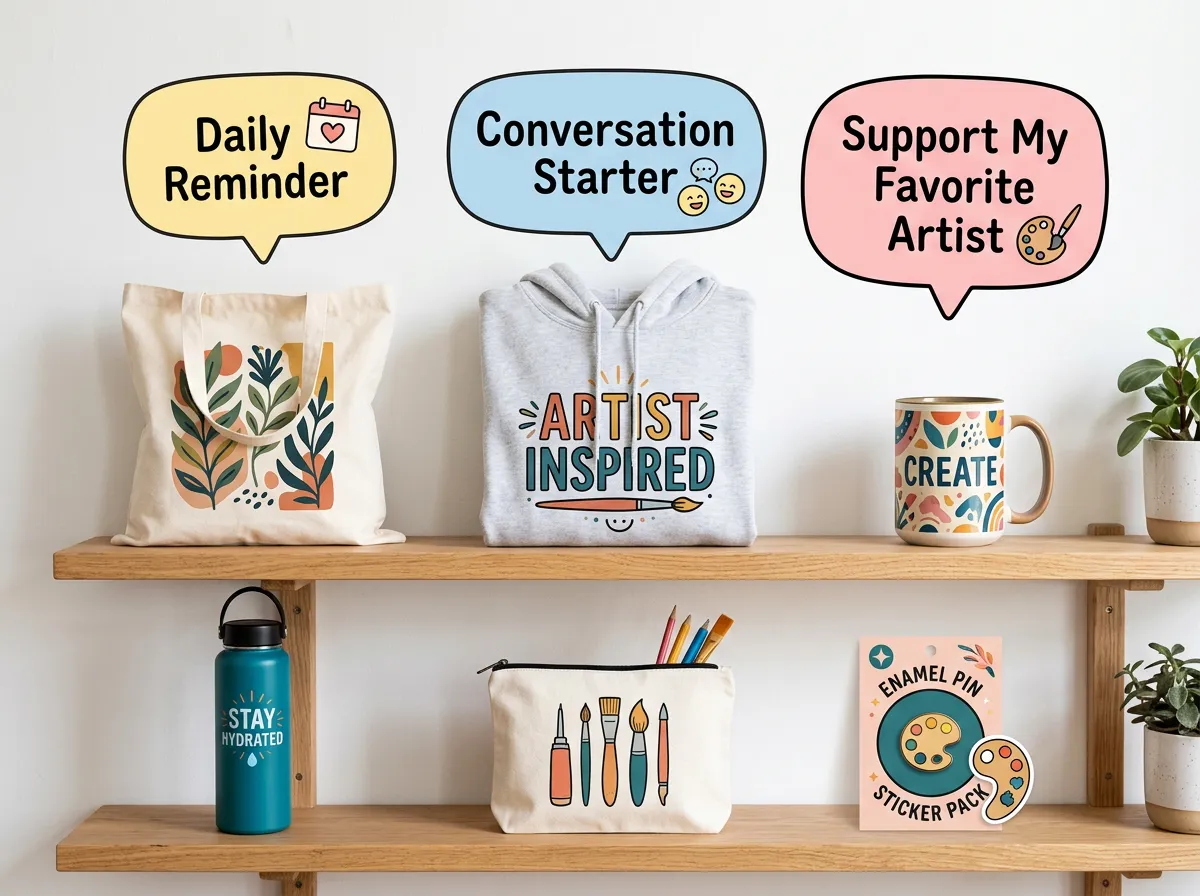
What This Means for Your Product Line:
Think about the "touch points" in your fans' daily lives: Morning routine with mugs and travel tumblers; Work & study with notebooks, mousepads and desk mats; On-the-go with phone cases, tote bags and keychains
The key is to make your art a functional part of their environment, not just something they admire from a distance.
Certainly, there are challenges involved in production. Historically, offering this many product types meant dealing with multiple suppliers, different file specs, and a logistical nightmare. This is where end-to-end infrastructure shines. With Genki, for example, they handle production across all these categories under one roof, and they manage the global shipping and customer service too! You literally just upload the design and they handle the rest.
Driver 3: Supporting the Creator ("I Want You to Keep Making Art")
This is the most powerful and most overlooked driver. Fans don't just buy merch because they want stuff. They buy it because they want you to succeed.
When you frame your merch as a way for fans to directly support your creative journey, the purchase becomes an act of patronage, not just consumption.
This is why transparency works so well. Creators who share behind-the-scenes content about their merch process often see better conversion than those who just post a shop link.
What This Means for Your Product Line:
Make it easy for fans to support you:
- Take into account fans with varying levels of financial means and offer a range of price points.
- Bundle items for superfans.
- Launch limited drops to create urgency and exclusivity.
But the friction problem is, many creators avoid launching merch because of the upfront costs and risks. What if nobody buys? What if you're stuck with 200 unsold mugs?
This is where print-on-demand for creators becomes a game-changer. You only produce what sells. No inventory risk, no upfront costs, no minimum orders. Fans can support you, and you don't gamble your savings.
For creators who want to focus on art and not logistics, automated POD infrastructures remove almost all the friction. Take Genki as an example, they generate the product designs, handle fulfillment, and even manage returns. You keep creating; they handles the business operations.
The Bottom Line: Variety, Utility, and Low Friction
If you want your merch to sell, ask yourself:
- Does my product line offer enough variety for different fan personalities?
- Am I providing useful items that integrate into daily life?
- Have I removed all the friction that stops fans from buying (and stops me from launching)?
The creators who crack this formula don't just make sales but build sustainable income streams that grow while they sleep.
If you've been putting off launching merch because the setup feels overwhelming, consider exploring automated solutions. Genki let you upload your art, auto-design a full product line, and start selling in minutes either on their hosted storefront or synced to your existing Shopify/Etsy shop. The psychology is clear: your fans want to buy. The only question is whether you'll make it easy for them.
Want to see how your art looks across hundreds of products instantly? Try uploading a design on Genki and watch the automation work.
Related readings: