The Pattern That Never Left the Village
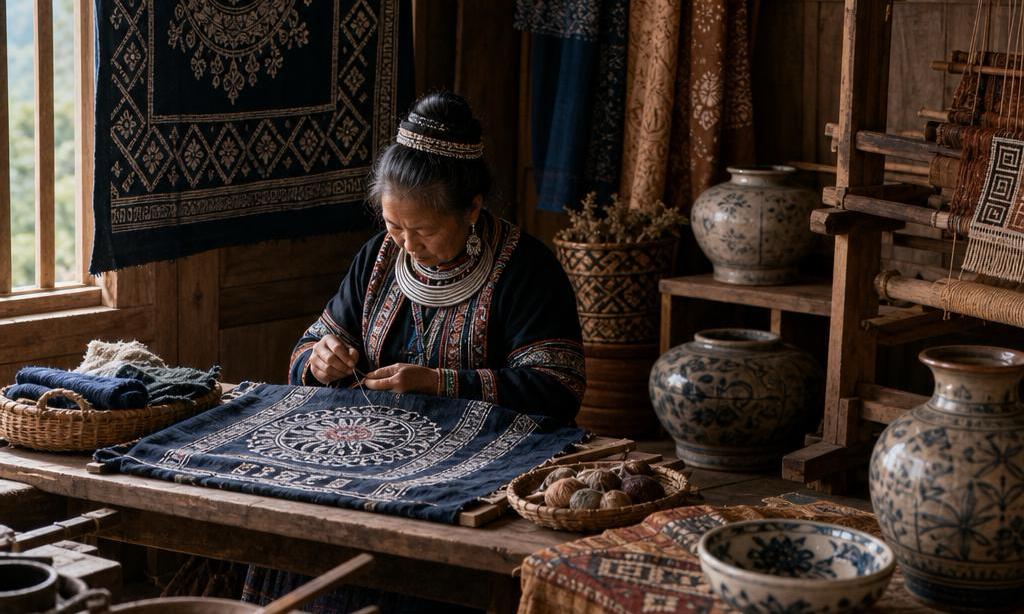
Somewhere in a small workshop, a pattern is waiting.
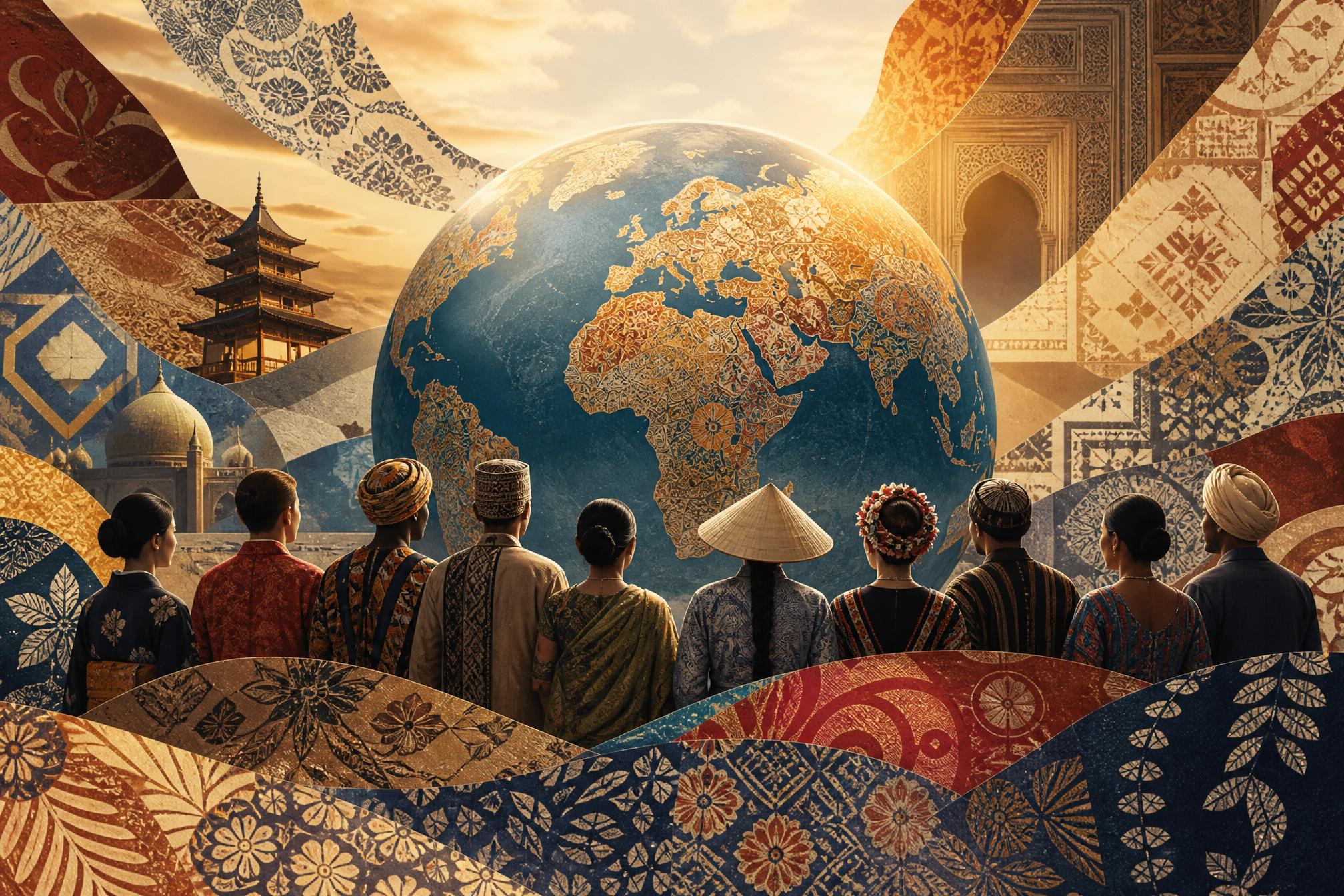
It might be an embroidery motif passed down through four generations of women in a Miao village. It might be a batik design that has decorated ceremonial cloths in Sumatra for centuries. It might be a geometric weave from the Andes, or a hand‑painted ceramic glaze from a studio in Portugal.
The pattern is beautiful. It carries centuries of meaning. It has survived wars, migrations, and the erosion of time.
But it has never been seen by the world.
And that’s the problem.
The Global Market Is Hungry for Heritage
Here’s what the numbers say:
- The global handicrafts market was valued at over $986 billion in 2025, and is projected to reach $2 trillion by 2034.
- The European craft sector alone serves an estimated 153 million consumers and is valued at €50 billion.
- Handicrafts are among the top ten high‑value export products in countries like Vietnam, with presence in 163 markets worldwide.
- From Indonesia to Peru to Zimbabwe, artisan exports are growing steadily — but most of that growth is driven by a small number of organized producers, not by the individual artisans who actually make the work.
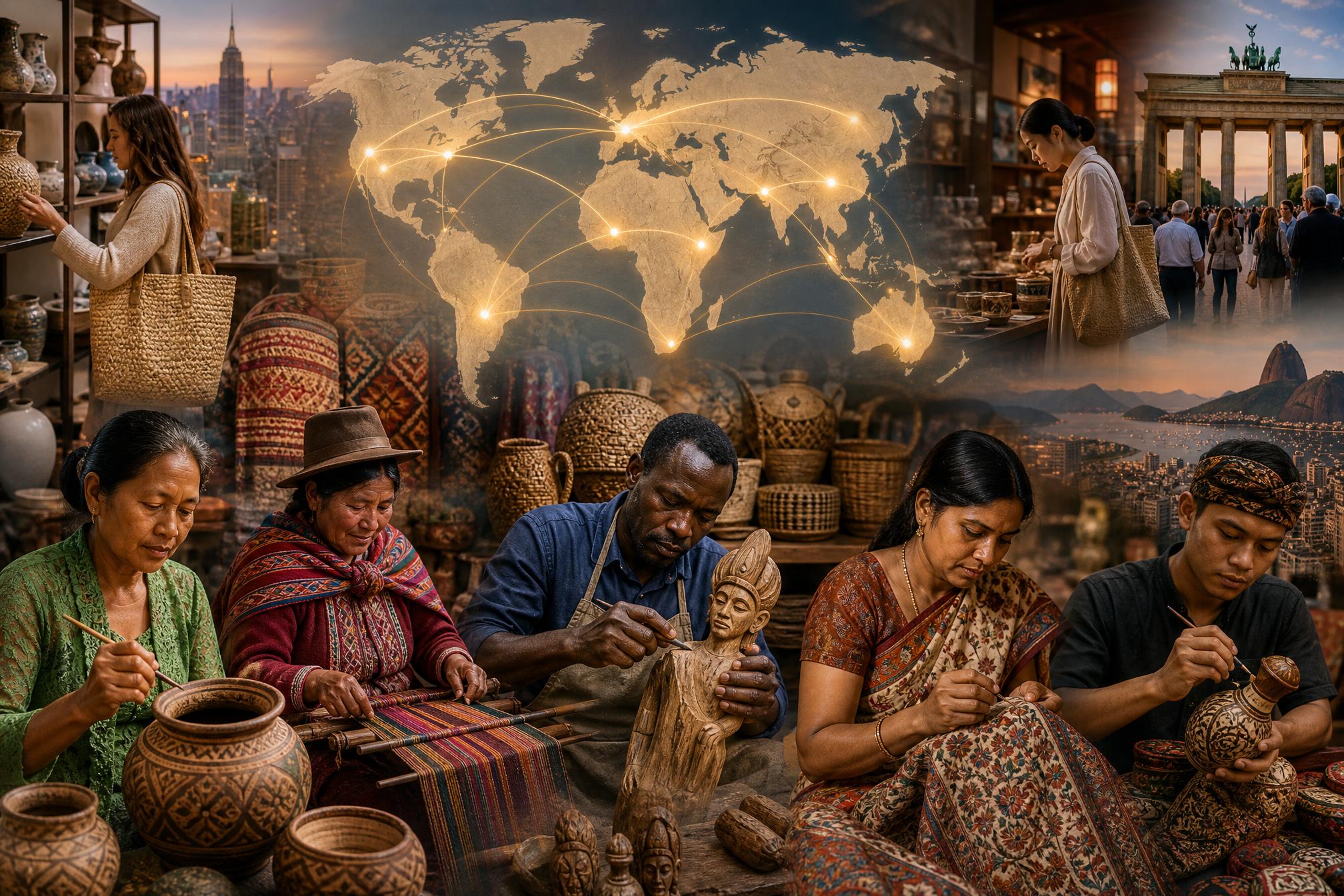
The global appetite for handmade, culturally authentic products has never been stronger. Consumers in New York, Tokyo, Berlin, and São Paulo are actively seeking objects that carry meaning, story, and heritage.
Yet most of the world’s artisans are still selling at local markets, struggling to make ends meet.
Why Can’t Artisans Reach the Global Market?
The gap isn’t talent. It isn’t quality. It’s infrastructure.
Language is a wall.
A master embroiderer in rural China might create breathtaking work, but she can’t write a product description in English, German, or Japanese. She can’t explain the cultural significance of her patterns to a customer in Paris.
Logistics are a nightmare.
The first time an artisan tries to ship overseas, they face customs forms, international shipping rates, and delivery tracking — a system built for corporations, not for individuals.
Platforms are overwhelming.
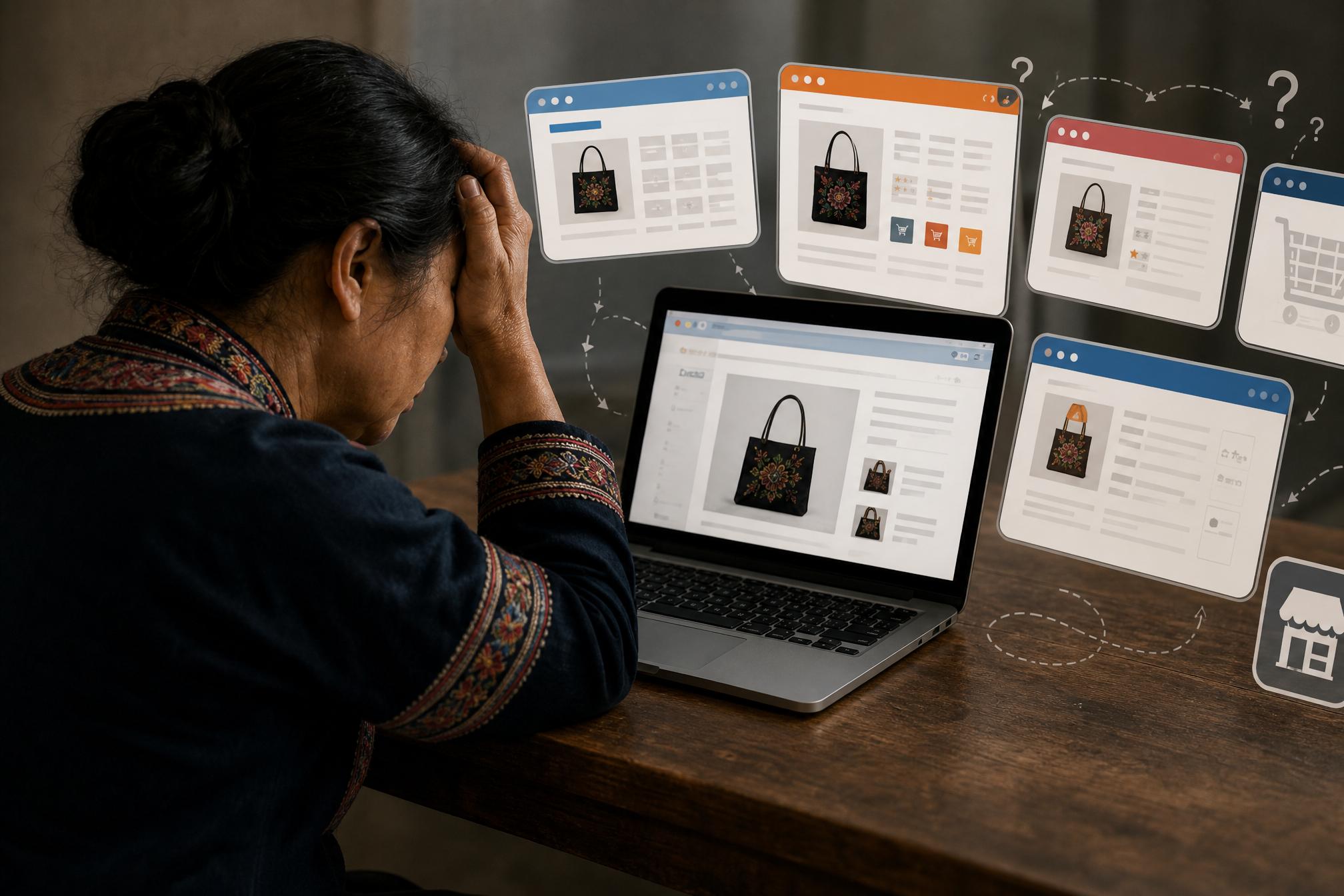
Etsy, Shopify, Amazon Handmade — each has different rules, listing formats, and approval processes. An artisan who has spent decades mastering a craft shouldn’t have to spend hours learning keyword optimization.
Copycats are everywhere.
Traditional designs are often treated as “public domain” by mass producers. One artisan’s original pattern can be copied and sold by factories within weeks — without credit, without compensation.
The result? Most of the world’s craft heritage stays locked in small workshops, never reaching the people who would treasure it.
The Honest Truth About Genki and Handcrafted Goods
Before we go further, let’s be clear about what Genki can and cannot do — today.
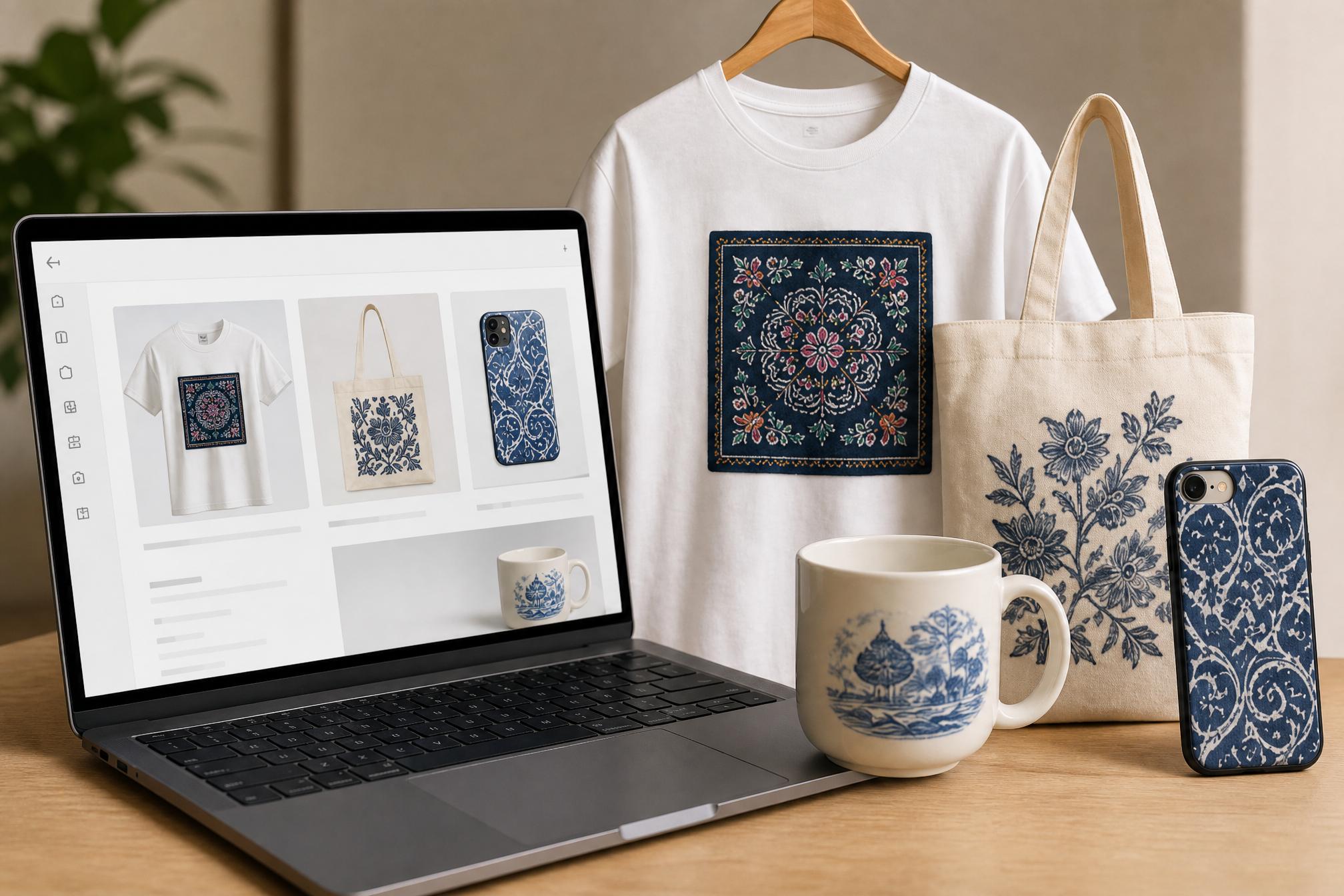
Genki’s current model — print‑on‑demand (POD) — works beautifully for patterns, prints, and flat designs.
- An embroidered Miao pattern? Yes.
- A blue‑and‑white ceramic motif? Absolutely.
- A batik textile design from Sumatra? Yes.
- A hand‑carved wooden sculpture? Not yet.
That’s because POD is about digital printing on standardized blanks: T‑shirts, phone cases, tote bags, mugs. It’s designed for scalability and low‑cost global shipping — not for one‑of‑a‑kind handcrafted objects.
However, this is only phase one.
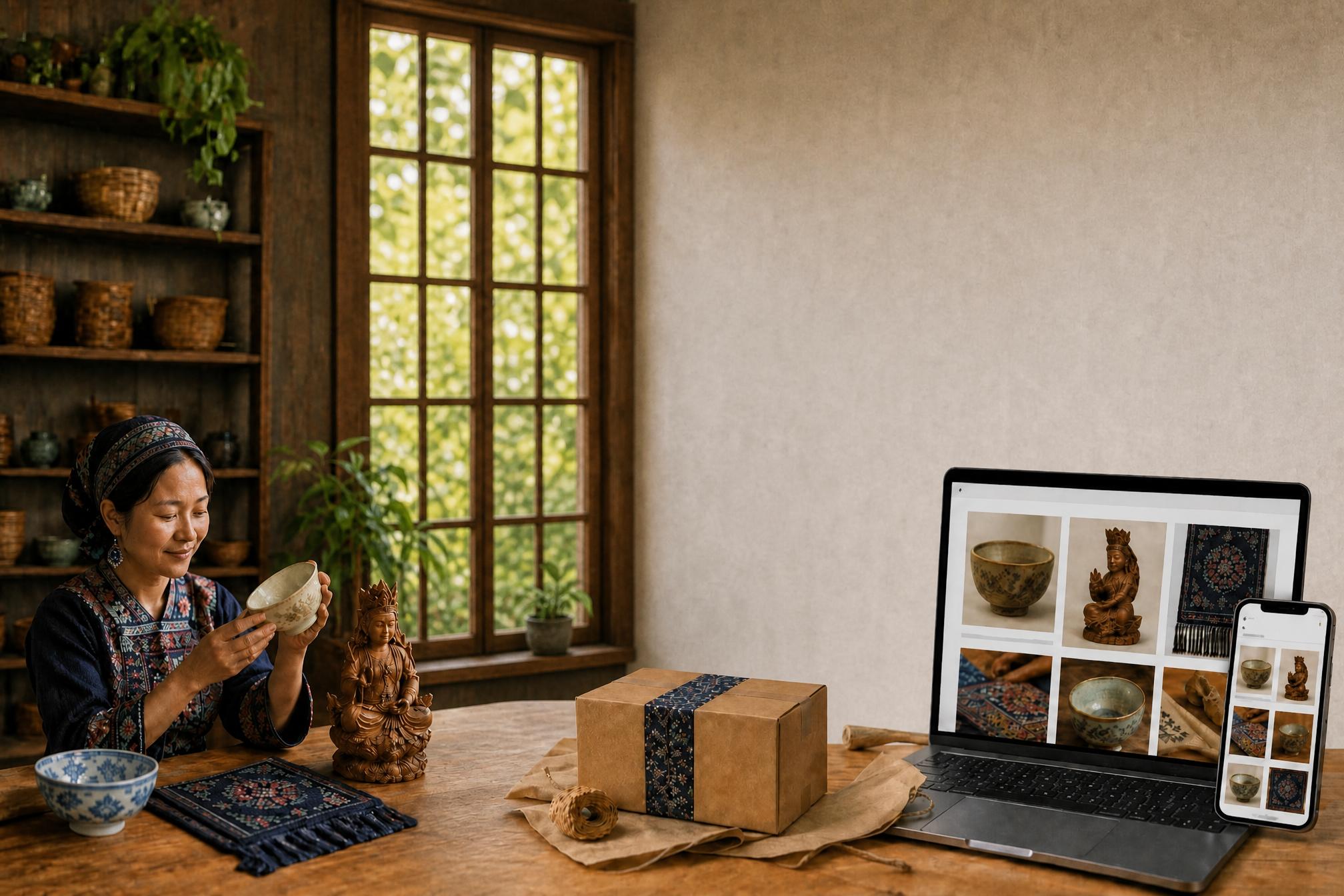
Genki’s product roadmap includes a “maker direct” channel — a self‑fulfillment option that will allow artisans to ship their own handmade pieces while still using Genki’s global storefront, localization, and multi‑platform listing capabilities. When that goes live, you’ll be able to sell your actual ceramic teabowls, wood carvings, and embroidered pieces through the same one‑click interface.
What You Can Do Today: Let Your Patterns Travel First
Until the self‑fulfillment channel arrives, here’s what you can do right now:
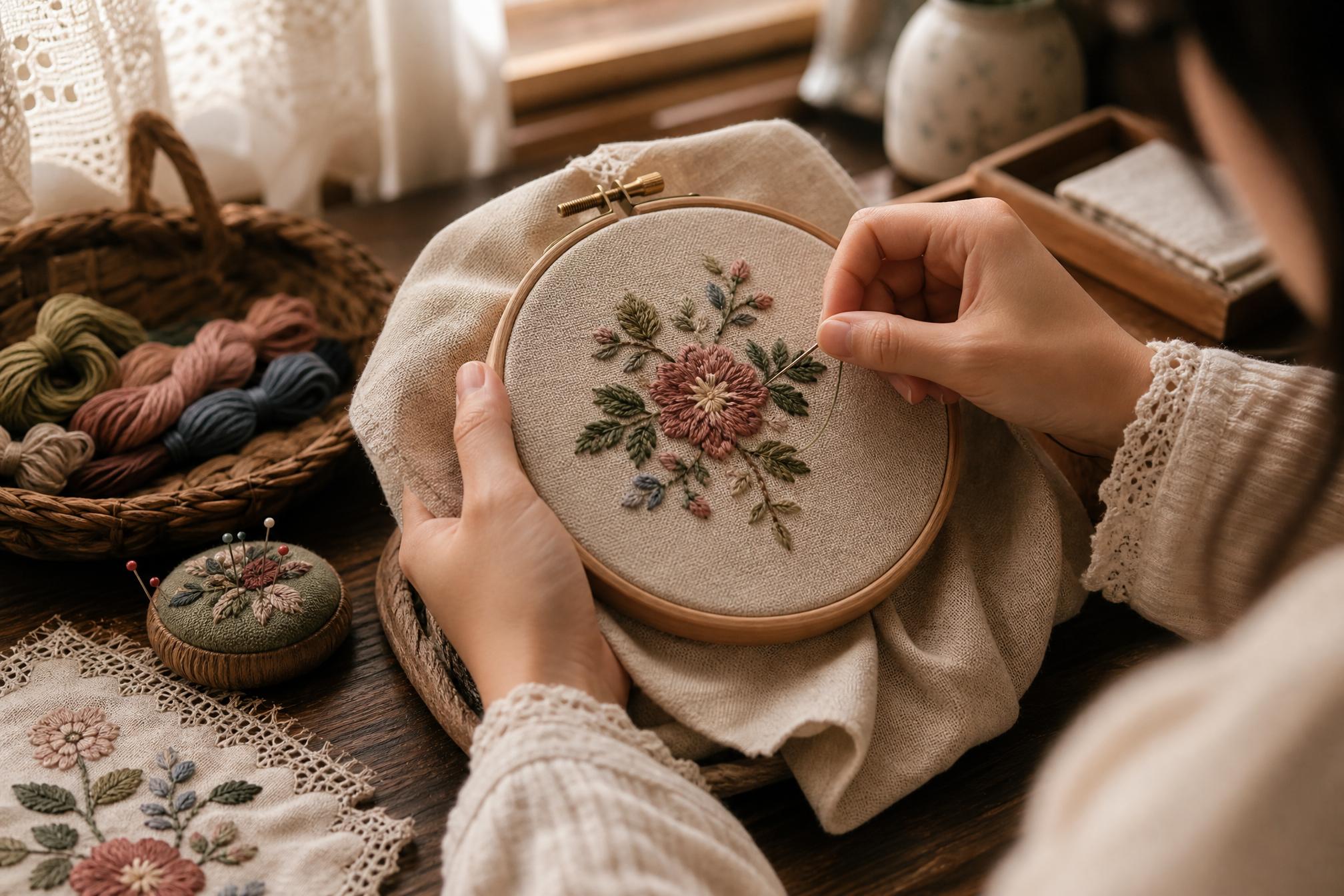
Digitize your patterns.
Upload your traditional motifs to Genki. Let them live on T‑shirts and tote bags sold in New York, Berlin, and Tokyo. Test the global appetite for your aesthetic — without touching a single piece of inventory.
Build your brand.
Each sale is a signal that your heritage has value beyond your village. It builds recognition, trust, and a customer base that will be ready when you are. A 2025 study found that products incorporating traditional cultural elements generate gross profit margins 35–50 percentage points higher than standard lines.
Wait for phase two.
When self‑fulfillment arrives, you’ll be able to plug your handmade pieces into the same system — and take your craft from local workshop to global market, with everything else handled automatically.
What Genki Does: Heritage Meets Automation
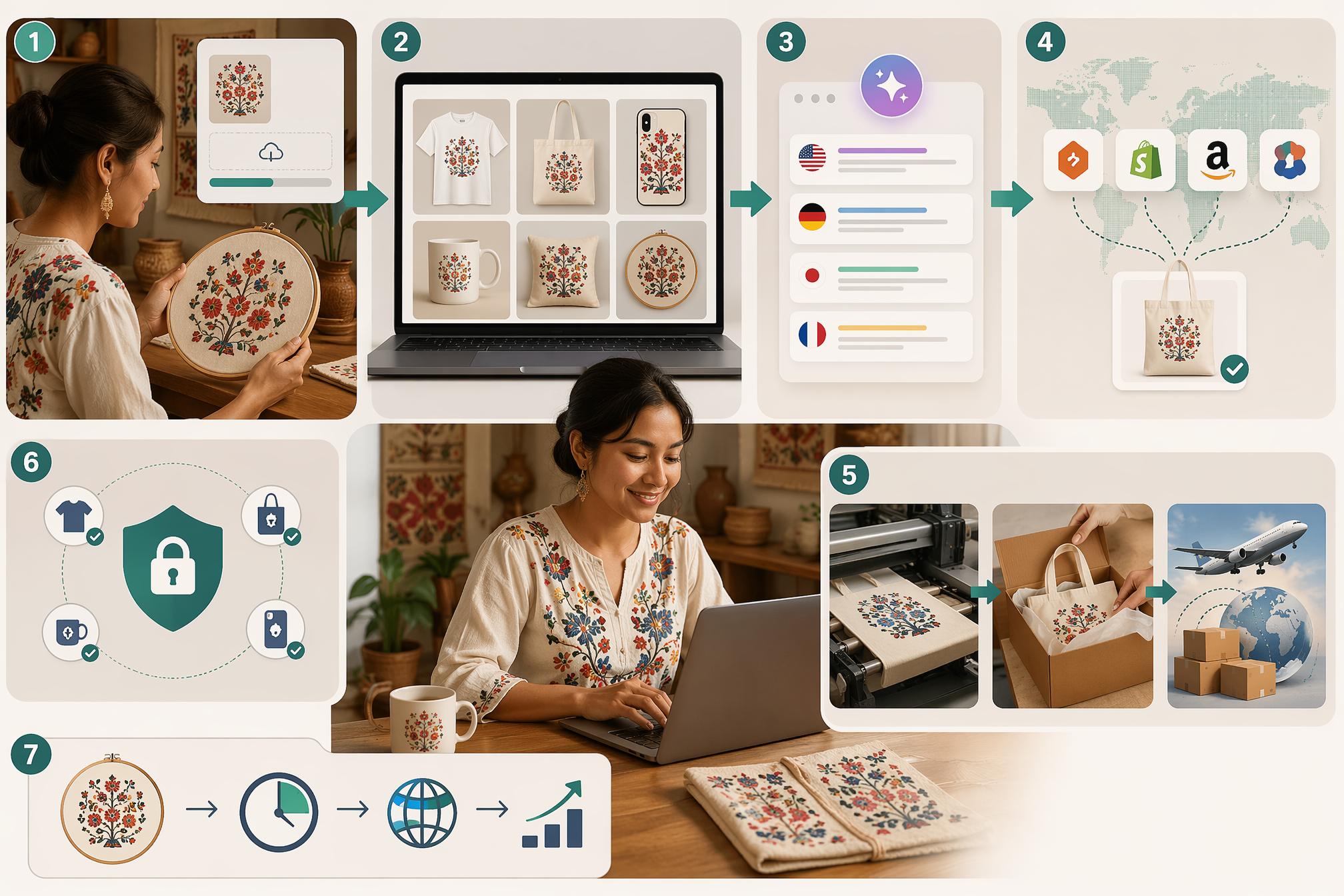
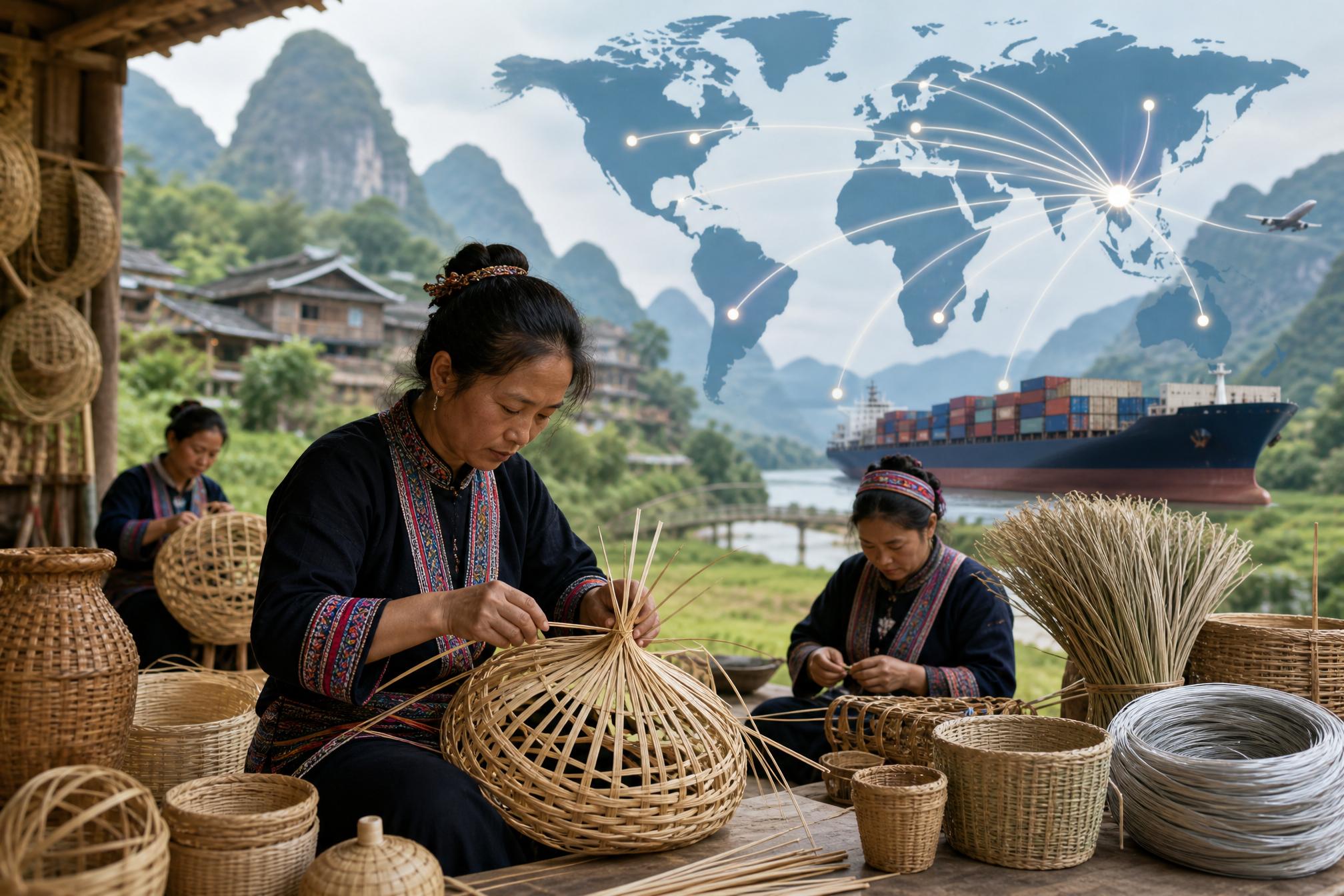
Here’s how it works — today, for patterns and designs:
You upload your craft. A photo of your embroidery, your ceramic pattern, your woven textile. Your IP, your heritage, your vision.
AI generates products instantly. Your design appears on T‑shirts, tote bags, phone cases, mugs, and more — professional product mockups in seconds, not weeks.
AI writes the copy. No more struggling with product descriptions in foreign languages. Genki generates localized, compelling descriptions for multiple markets automatically.
One‑click global publishing. Your products go live on Etsy, Shopify, Amazon, and other platforms simultaneously. No more learning each platform’s quirks.
Full‑service fulfillment. When orders come in — from Germany, Canada, Japan, anywhere — Genki handles production, packaging, and cross‑border shipping. You never touch inventory.
IP protection built in. Every product gets tracked. Your design stays yours.
And the entire process? Less than 15 minutes from upload to global listing.
Who’s Already Doing This?
The Miao Embroidery Pattern
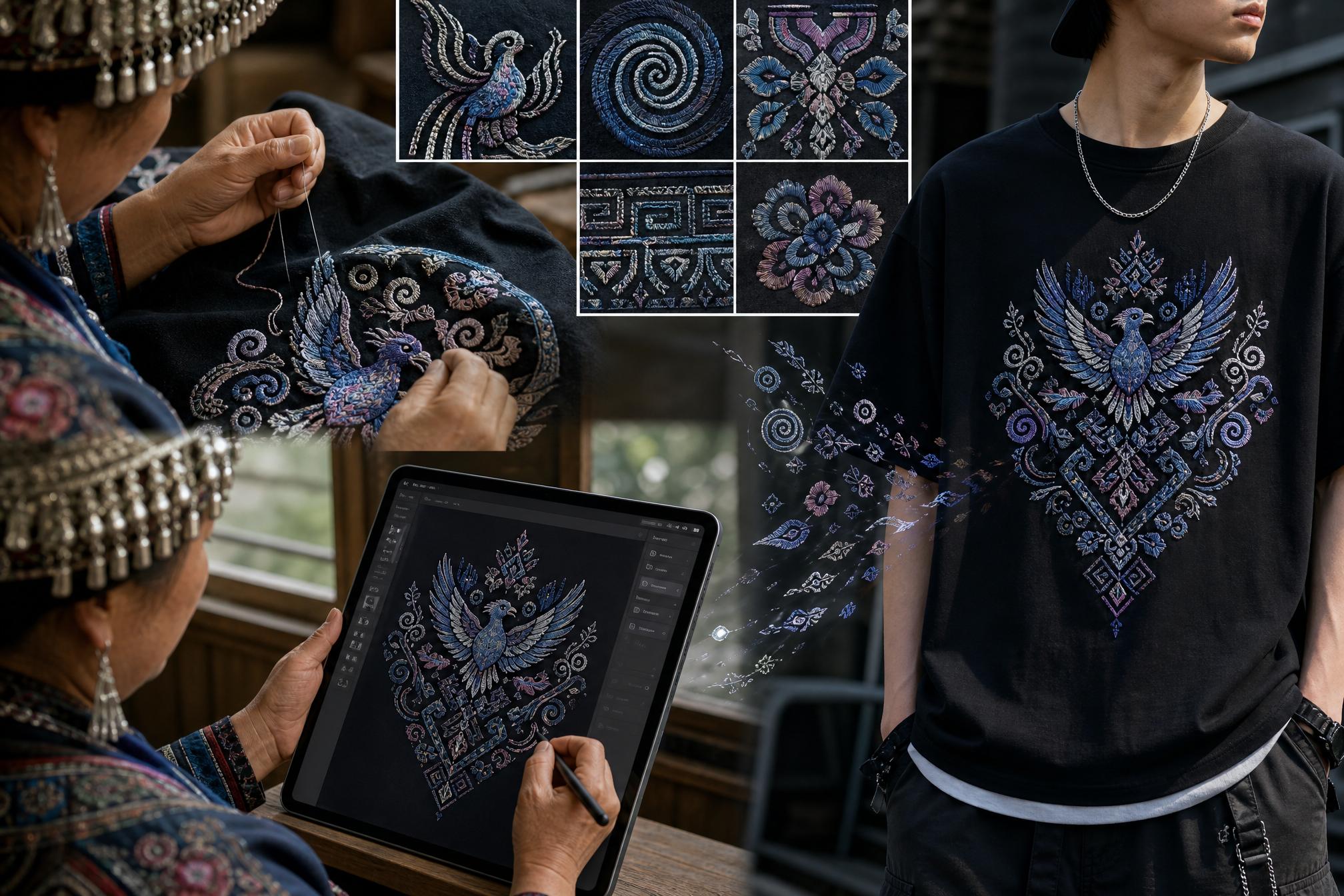
A young designer in China took traditional Miao embroidery symbols and fused them with streetwear — creating a signature T‑shirt that fused ancient motifs with contemporary fashion. With Genki, that same process could be replicated by the embroiderers themselves, without needing a designer intermediary.
The Sumatran Batik Revival
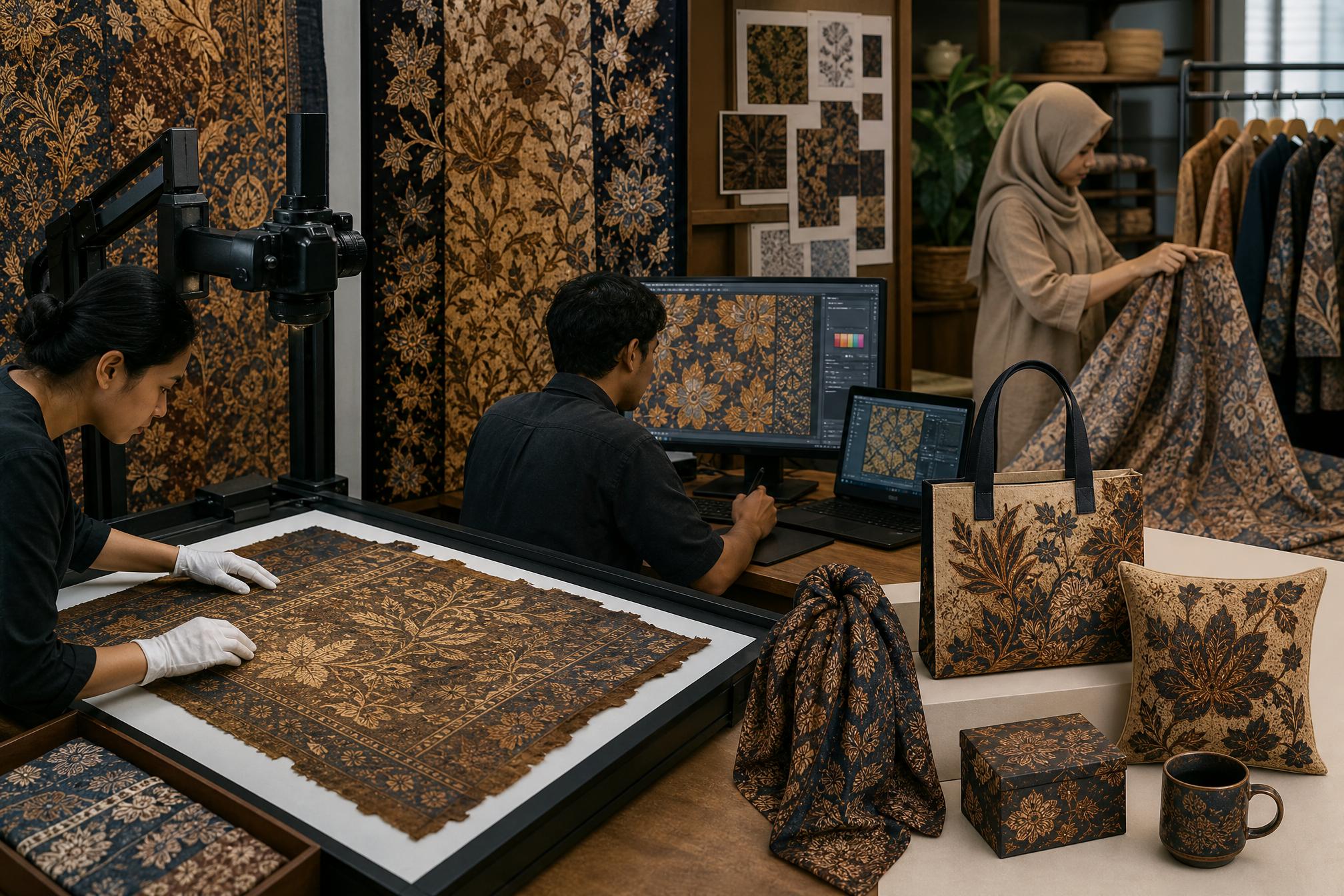
Researchers are working to digitize rare Sumatran batik motifs that are no longer being produced, creating models for their integration into the creative industry. Genki could turn those digitized motifs into global products immediately.
The Guangxi Weavers
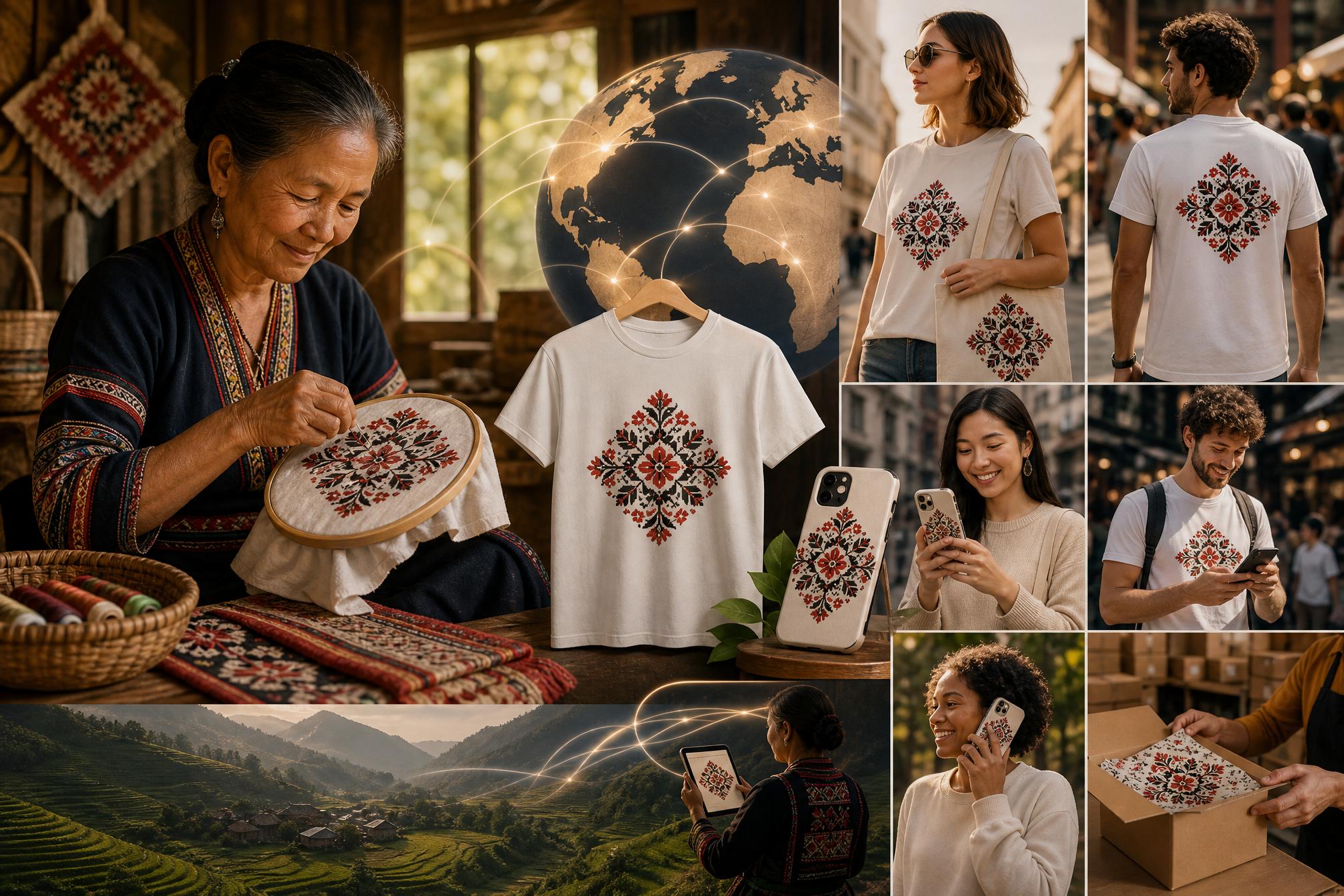
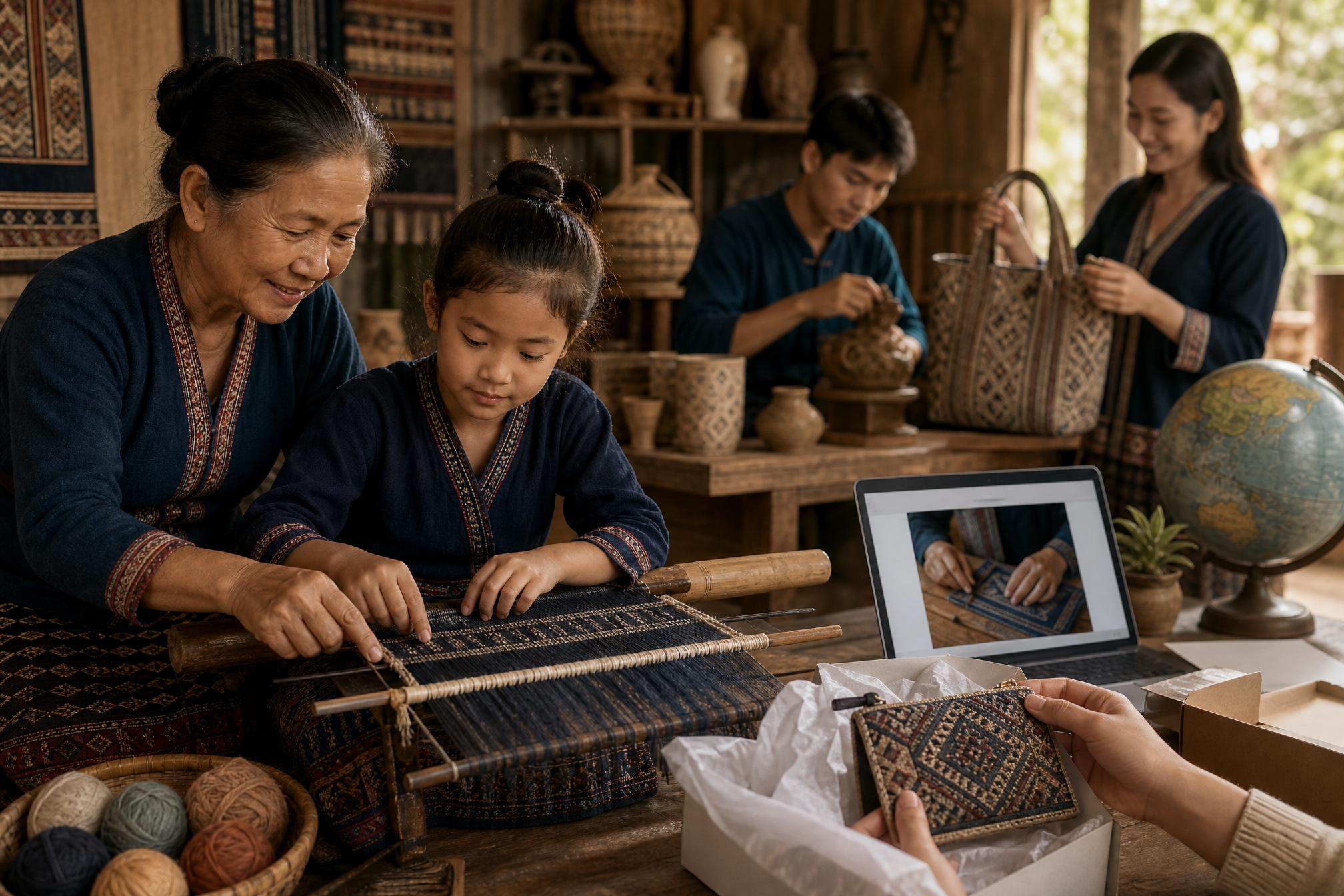
In rural Guangxi, China, artisans using bamboo, rattan, and silver grass now export their crafts to more than 50 countries — but only through organized cooperatives. Genki could give individual weavers direct access to the same global markets, without waiting for institutional support.
Why This Matters: Heritage Survives by Being Sold
Here’s the thing about heritage crafts: they don’t survive in museums. They survive in hands.
When an artisan can earn a living from her craft, she teaches her children. When young people see a future in heritage, they stay and learn. When global customers buy a piece carrying traditional patterns, they become part of keeping that tradition alive.
Selling heritage isn’t selling out. It’s how heritage survives.
And Genki makes it possible without forcing artisans to become e‑commerce experts, logistics managers, or multilingual copywriters.
You create. Genki handles the rest.
Start with Your Patterns. Grow into Your Craft.
Your grandmother’s embroidery motif. Your village’s iconic pattern. The design that only your hands can make.
Put it on Genki today. Let the world see it. Let it travel on T‑shirts and phone cases, carried by people who’ve never heard your name but are drawn to your culture.
Then, when the “maker direct” channel opens, you’ll be ready — not just with a design, but with a global audience already waiting for the real thing.
Upload your pattern today at genkios.com. The rest — the global storefront, the localization, the logistics — Genki handles.
Your heritage. Your craft. Your global future. Powered by Genki.
FAQ
Q: Can I sell my actual handmade products — like ceramics, wood carvings, or embroidered textiles — through Genki right now?
A: Not yet. Genki’s current model is print‑on‑demand, which works best for patterns, prints, and flat designs that can be printed on standardized products like T‑shirts, phone cases, and tote bags. However, Genki is developing a “maker direct” self‑fulfillment channel that will allow artisans to ship their own handmade pieces while still using Genki’s global storefront and logistics. Stay tuned.
Q: Will Genki “own” my patterns or designs if I upload them?
A: No. You retain full ownership of your IP. Genki provides the infrastructure to turn your designs into products and sell them globally, but your patterns belong to you. Period.
Q: Do I need to speak English to use Genki?
A: No. Genki’s AI handles localization automatically — generating product descriptions and titles in multiple languages. You upload your work in your language; Genki translates it for global markets.
Q: Do I need to hold inventory or ship orders myself?
A: No. Genki uses print‑on‑demand — products are made and shipped only after a customer orders. You have zero inventory risk and never pack a single box.
Q: How much does Genki cost?
A: Genki’s basic features are free. The platform only takes a percentage from orders you actually sell. That means Genki only makes money when you make money.
Q: What if I have zero followers or no existing customers?
A: That’s fine. Genki not only lists your products on major global platforms but also generates marketing assets and product descriptions for you. There’s also basic discovery within the platform. If someone loves your design, they can find it — even if you’re starting from zero.
Q: What kinds of designs work best with Genki’s current model?
A: Flat, two‑dimensional designs work best — embroidery patterns, batik motifs, ceramic glaze patterns, woven textile designs, illustrations, and photographic art. Three‑dimensional objects and one‑of‑a‑kind pieces will be supported when the self‑fulfillment channel launches.
Q: How fast can I get my products online?
A: From upload to global listing, the entire process takes less than 15 minutes.
Q: Can I sell on multiple platforms at once?
A: Yes. Genki publishes your products simultaneously to Etsy, Shopify, Amazon, and other major e‑commerce platforms with one click.
Q: How do I protect my traditional designs from being copied?
A: Every product created through Genki is tracked, and you retain full ownership of your IP. While no system can completely prevent copying, Genki provides a formal, trackable commercial presence for your designs — making it harder for copycats to claim they originated them.