For artists, illustrators, and creators, turning original artwork into physical products is easier than ever. Print-on-demand for artists removes the need to buy inventory, manage manufacturing, or pack orders yourself. But choosing a platform is about more than how easily you can put a design on a T-shirt.
Two platforms worth comparing are Genki and Redbubble. Both can help creators turn artwork into products without holding inventory, but they are built around different approaches. Redbubble is primarily an artist marketplace, while Genki focuses on connecting content, product creation, storefronts, and ecommerce.
So, which is better for selling art online in 2026? It depends on whether you want a simple marketplace for your designs or a more complete path from creative work to a creator business.
Genki vs. Redbubble: Different Platform Models
The biggest difference starts with how each platform views your artwork.
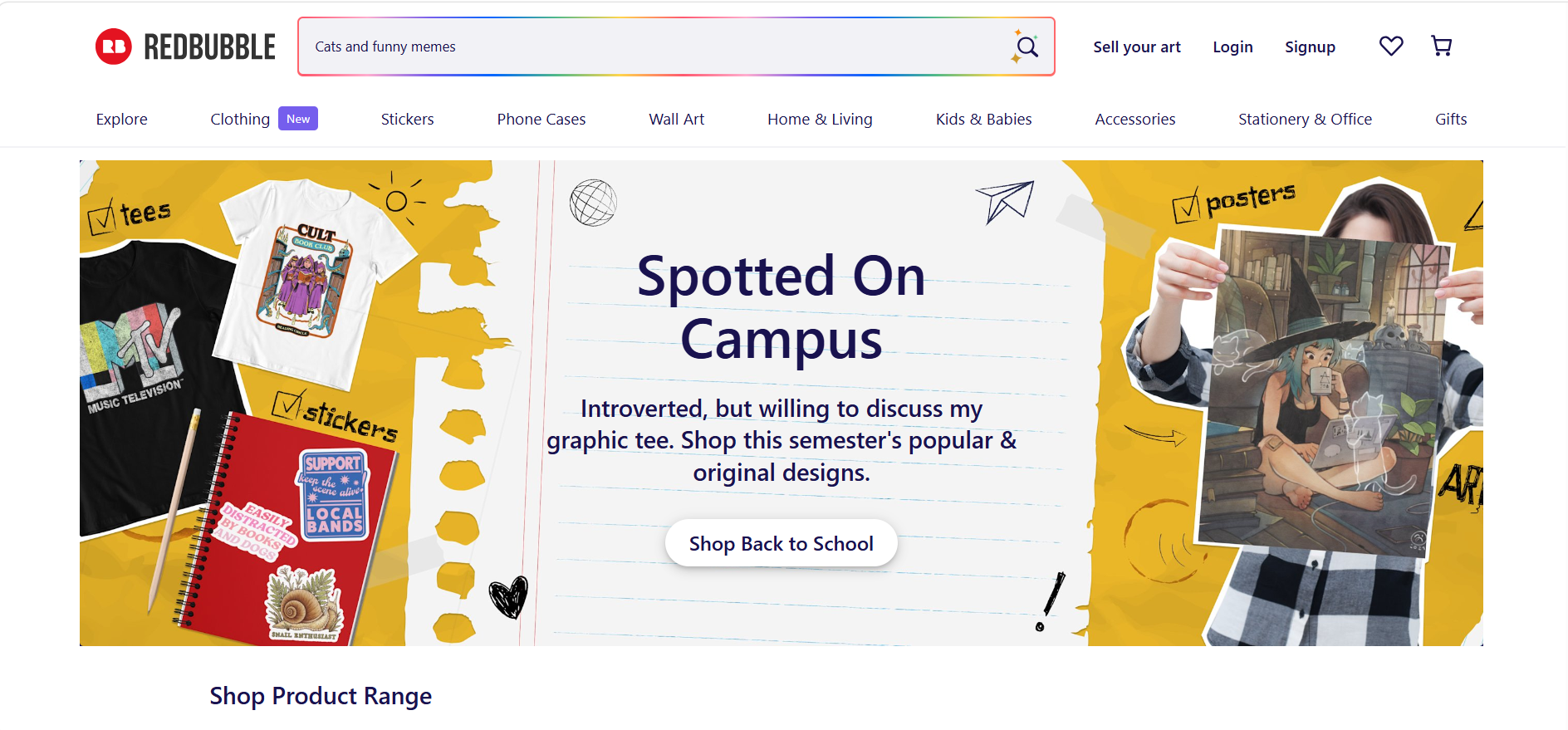
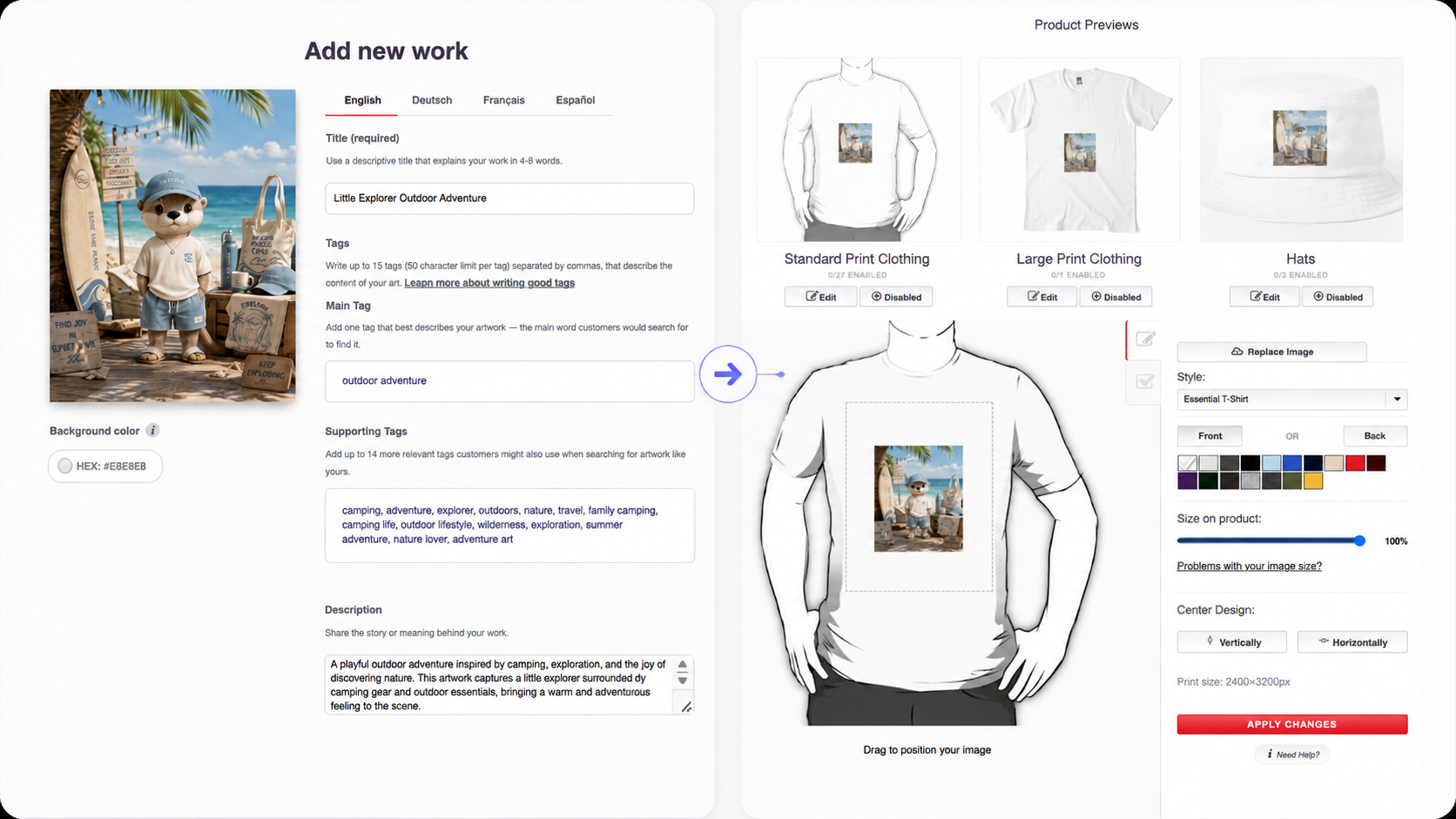
Redbubble follows a marketplace-first model. You upload an original design, select products, publish your listings, and Redbubble handles production and fulfillment when an order is placed. Your products then become part of a large marketplace where shoppers can browse designs from independent artists.
This makes Redbubble attractive for creators who want a relatively simple way to experiment with print-on-demand for artists without building an online store from scratch.
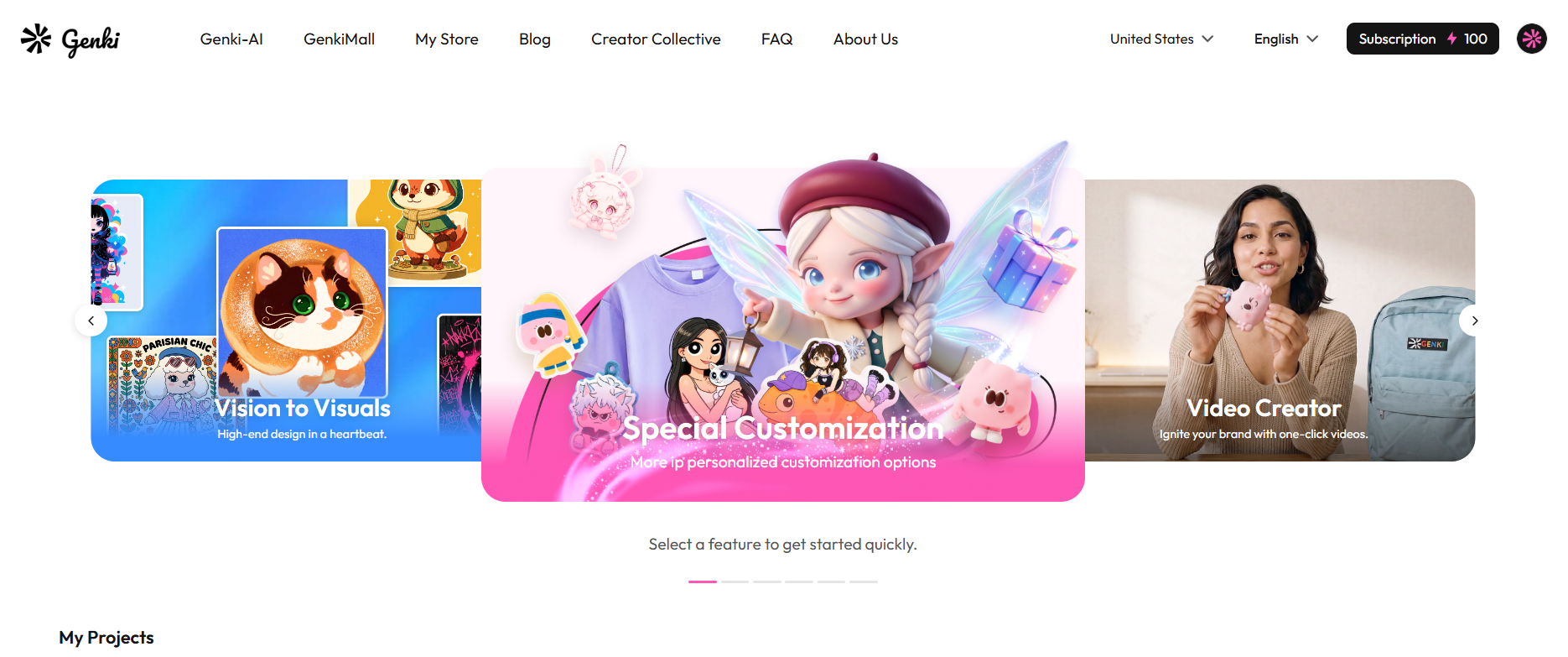
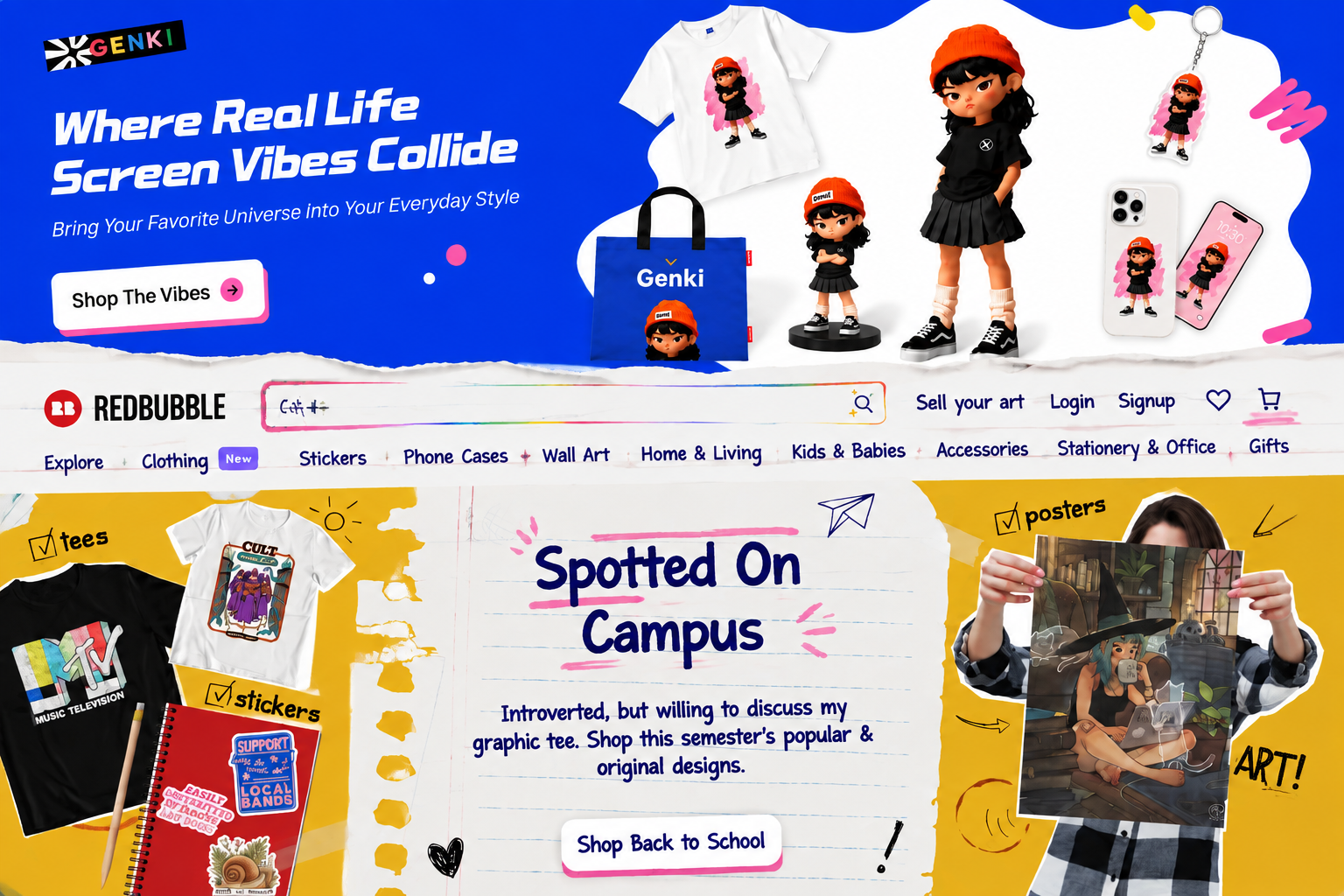
Genki takes a broader creator-commerce approach. Instead of treating the uploaded artwork as the end of the process, it focuses on what that artwork can become. Creators can turn original ideas and content into merchandise, build a storefront, manage products, and connect their work with ecommerce and distribution workflows.
The difference can be summarized simply:
Redbubble: artwork → marketplace → product sale
Genki: content → product → creator store → commerce
How Do Redbubble and Genki Create Products?
Creating the artwork is only the beginning. To build a merchandise business, creators often need to adapt one design across multiple products and create attractive product visuals.
Redbubble keeps this process straightforward. Artists upload their artwork and apply it to the products available on the platform. This simplicity is one of its strengths: creators can create product listings without worrying about manufacturing, inventory, or fulfillment.
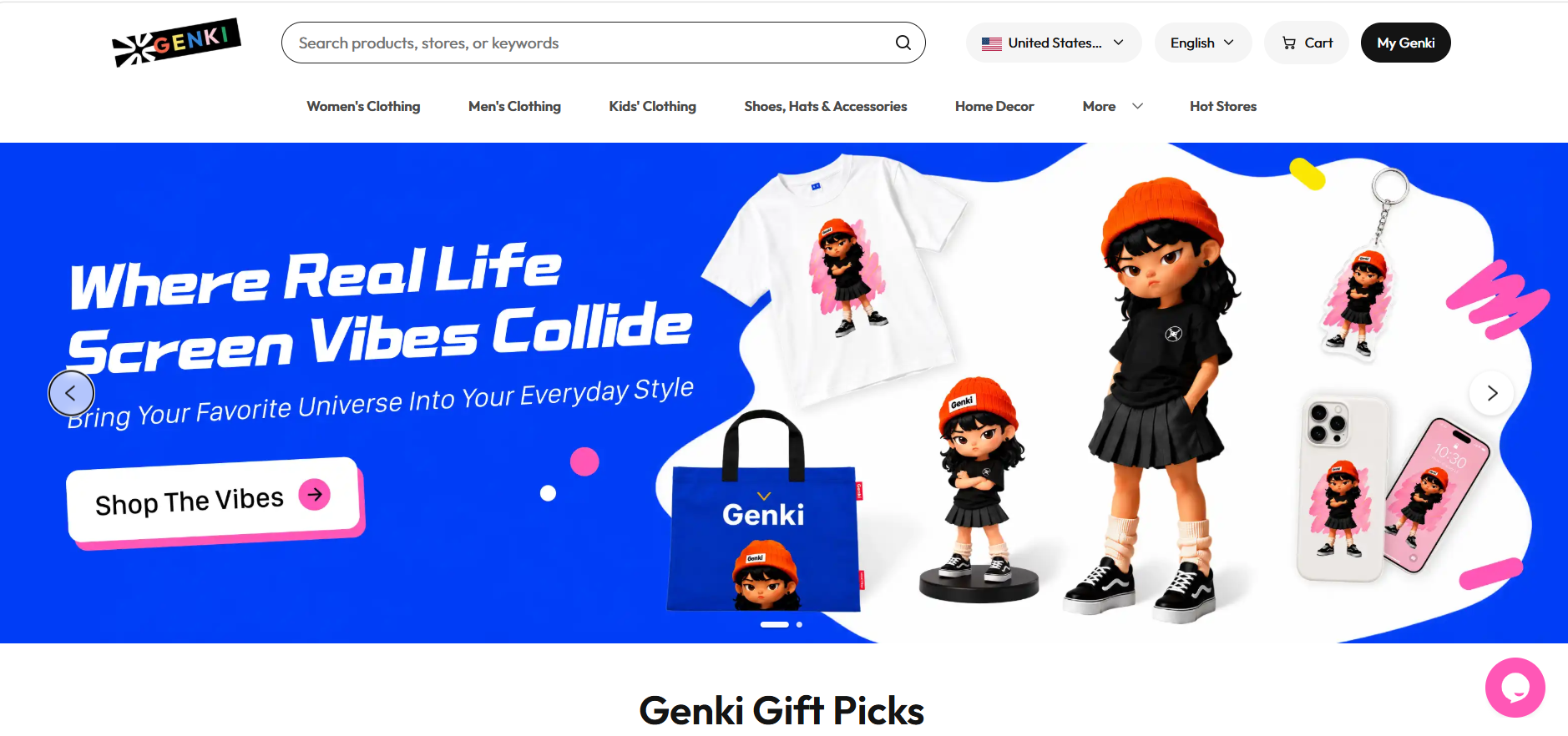
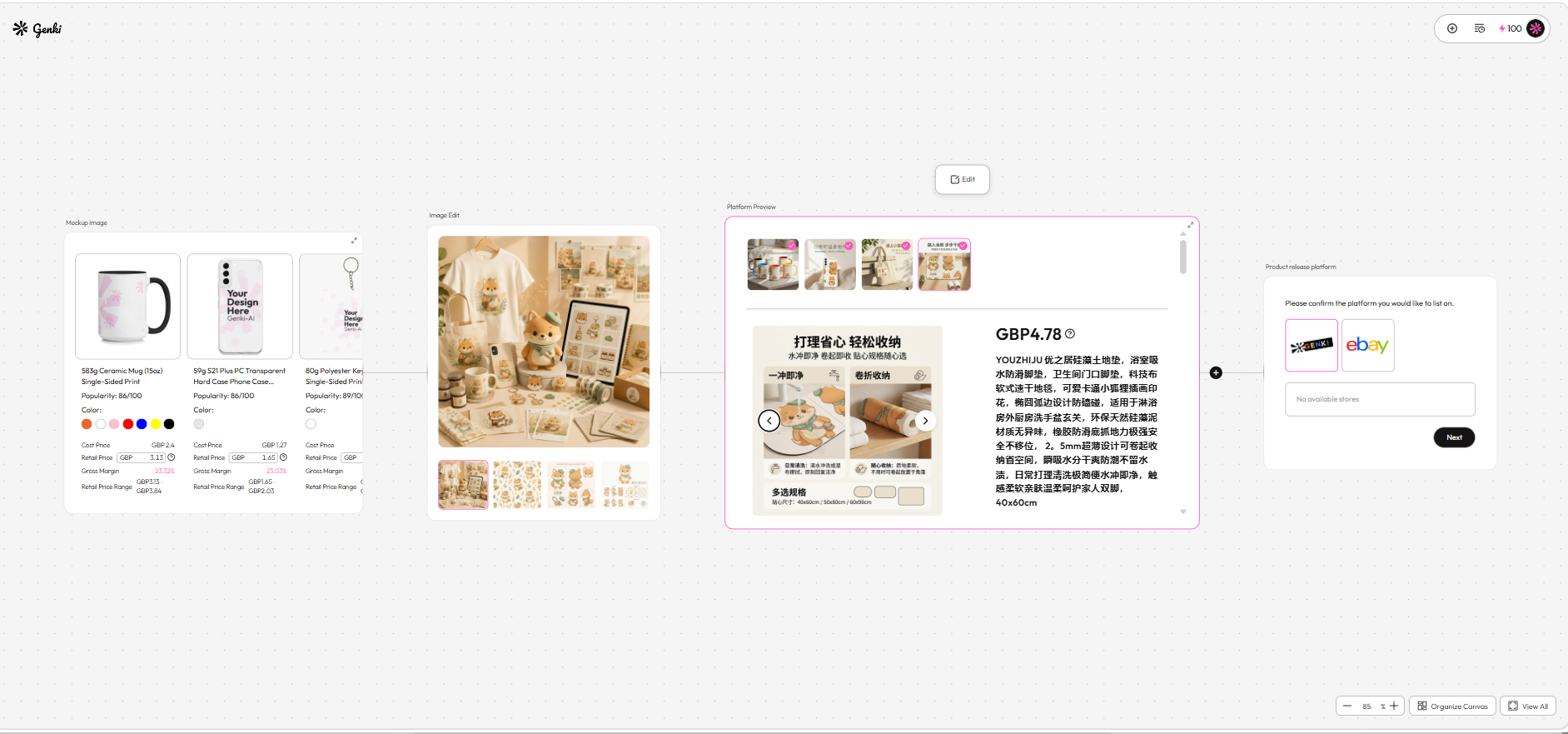
Genki puts more emphasis on the product creation workflow itself. Its AI-powered tools can help creators turn original ideas and artwork into product concepts and visual assets, making it easier to explore merchandise beyond a single design.
For example, an original illustration or character could become part of a coordinated collection rather than remaining as one isolated product listing. This approach can be useful for creators who regularly produce content and want to develop multiple merchandise ideas from the same creative identity.
In other words, Redbubble makes it easy to put a design on products, while Genki focuses more on turning creative content into a product collection.
Marketplace vs. Creator Store: Where Do You Sell?
Where your products live can become increasingly important as your audience grows.
Redbubble gives artists access to an established marketplace. This can be useful if you do not have an existing audience and want your artwork to be discoverable alongside thousands of other independent designs.
However, your products are presented within the broader Redbubble marketplace. Your individual creator brand is therefore part of a much larger shopping environment.
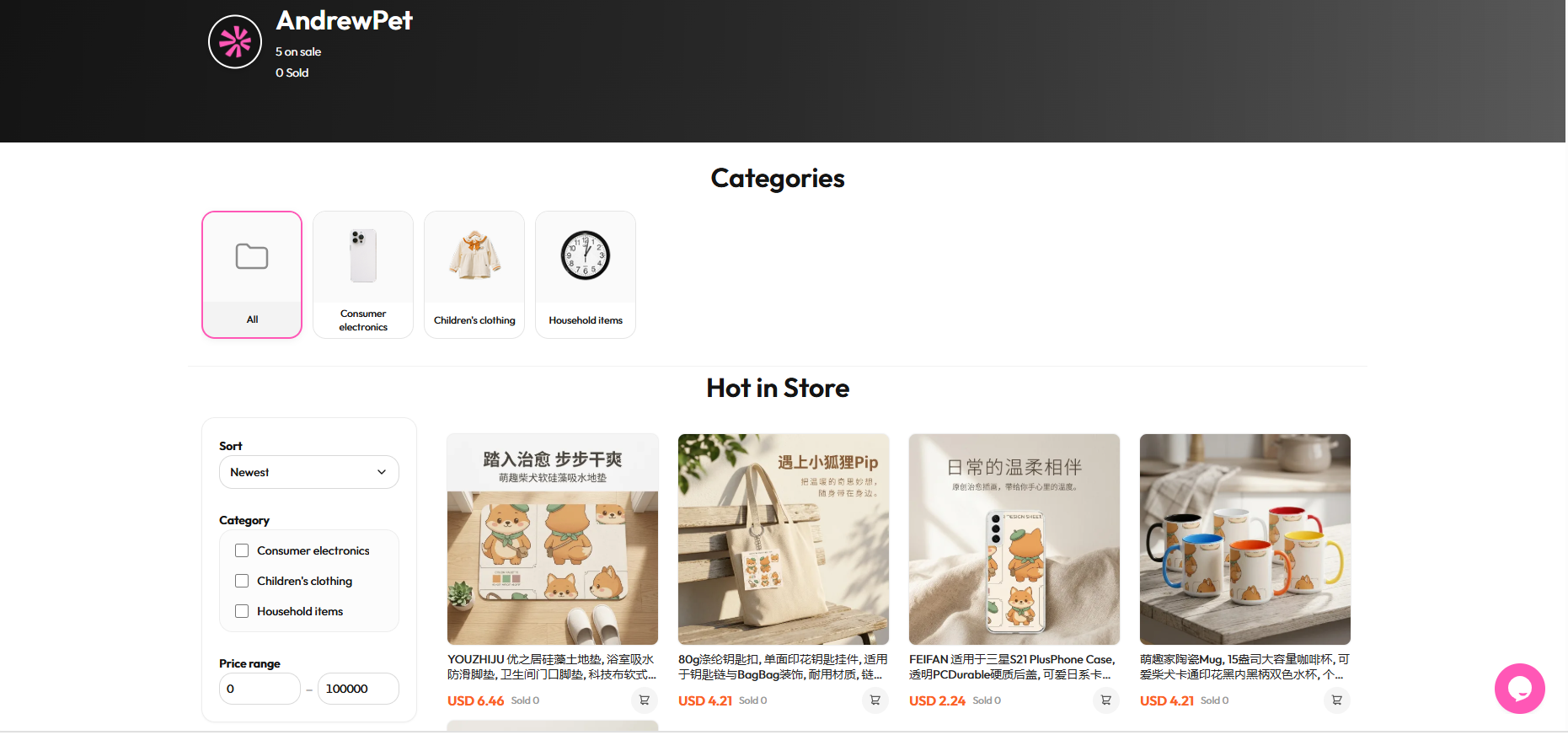
Genki takes a different approach by emphasizing the creator store. Instead of relying entirely on marketplace discovery, creators can build a branded shopping destination around their content and products.
This distinction matters for creators with an existing audience on Instagram, TikTok, YouTube, or other platforms. Rather than simply asking where to upload a design, they can think about how to turn their audience into customers and build a recognizable destination for their merchandise.
For creators who care about branding, this can make the store itself part of the creative business.
Which Platform Is Better for Building a Creator Brand?
The biggest long-term difference may be what happens after the first product sale.
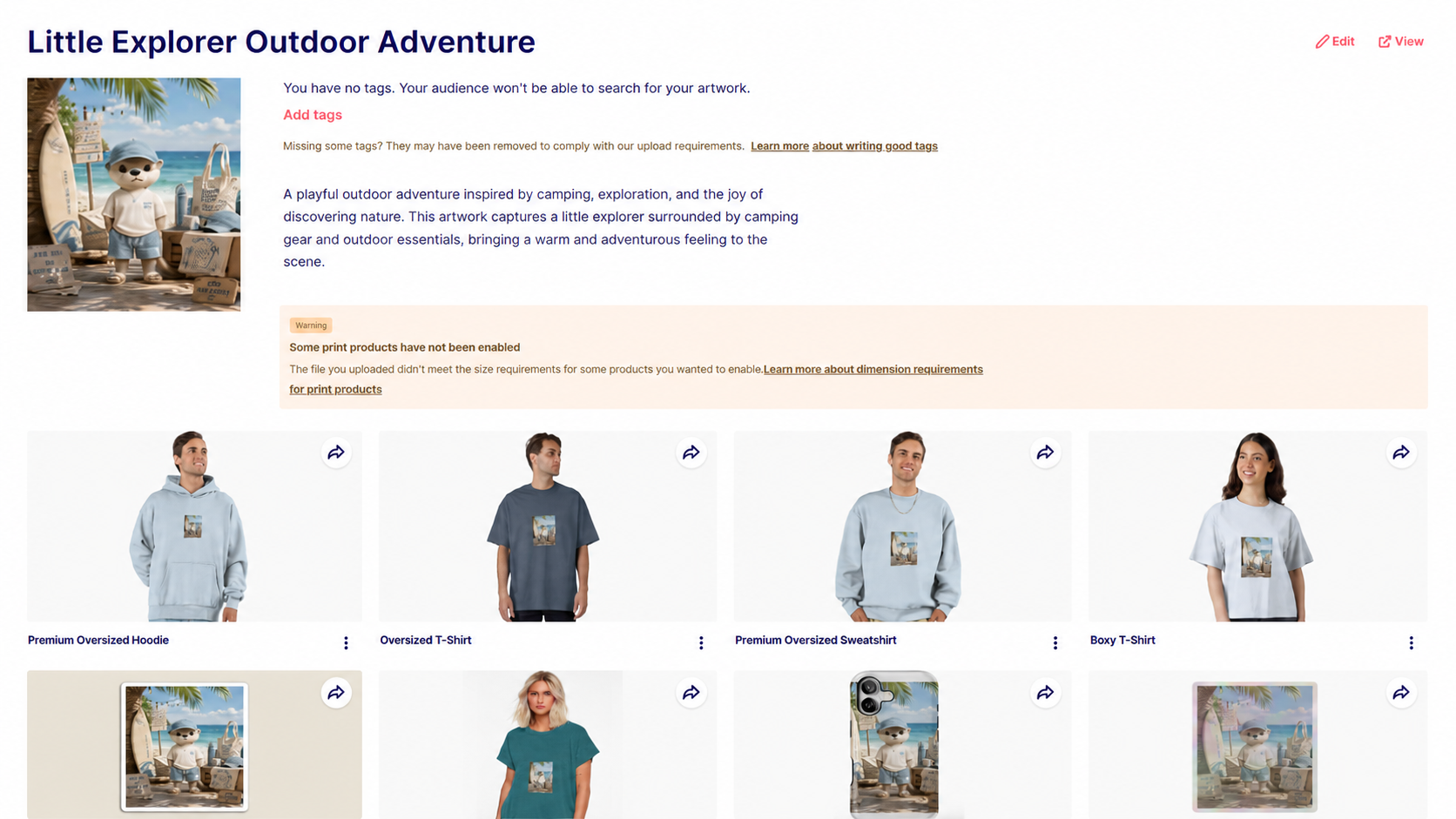
Redbubble works well when the primary goal is to sell individual designs through a large marketplace. It can be a practical starting point for artists who want to test ideas, create merchandise, and avoid the operational complexity of running production and fulfillment themselves.
But many modern creators are building businesses around more than individual illustrations. An original character, visual identity, meme, art style, or content series can develop into multiple products and an entire merchandise collection.
This is where Genki takes a more creator-focused approach. By connecting content, product creation, storefronts, and ecommerce workflows, it gives creators a way to think beyond individual listings and toward a broader creator commerce strategy.
The difference is not simply about where a T-shirt is printed. It is about whether your artwork remains a product listing or becomes part of a larger creator brand.
Genki vs. Redbubble: Which One Should You Choose?
There is no single answer for every artist.
Redbubble may be the better choice if you want a straightforward way to upload artwork, create print-on-demand products, and access an established marketplace. It is particularly suitable for beginners who want to test designs without building an independent store.
Genki may be a better fit if you already create content, have an audience, own original IP, or want to build a recognizable brand around your artwork. Its broader product and ecommerce workflow is designed for creators who want to turn creative work into a more connected business.
Ultimately, the choice comes down to what you want your artwork to become.
If you want to list designs and reach marketplace shoppers, Redbubble offers a simple path.
If you want to turn creative content into products, build a creator store, develop merchandise, and create a longer-term revenue stream, Genki offers a broader approach.
| Category | Genki | Redbubble |
|---|
| Pricing | Subscription ($19–199/month) + credits; free tier | Free; about 20–40% commission |
| Earnings | High margin after costs; set own price | Markup on base price |
| Listing Speed | AI bulk generate; one‑click publish | Manual upload per design |
| Design Tools | AI assistant; auto adapt to products | Basic crop & preview |
| Fulfillment | POD global; white‑label store brand | POD global; Redbubble branded |
| Traffic Source | Creator's own audience | Marketplace discovery |
| Brand Ownership | Own storefront; custom domain | Part of Redbubble marketplace |
The Verdict
Redbubble and Genki both make it possible to sell physical products without managing inventory or production yourself, but their priorities are different.
Redbubble is fundamentally marketplace-first: upload your artwork, create products, and let the platform connect your designs with shoppers.
Genki is more creator-commerce-oriented: take your content or original IP, turn it into products, build a storefront, and develop a broader path to monetization.
For artists looking for a simple introduction to print on demand, Redbubble can be a practical starting point. For creators who see their artwork as part of a larger brand, merchandise collection, or IP business, Genki offers a more connected way to move from creativity to commerce.
Your artwork does not have to stop at a digital file. With the right workflow, it can become a product, a collection, a store, and another way to build revenue from the audience you have already created.
🎉Ready to turn your creative ideas into products? Explore Genki and start building your creator store today.