If you've been creating art, videos, or digital content for a while, you've probably heard the same advice over and over: "Just post consistently and the money will come."
Yeah, right.
The truth? Views don't pay bills. Followers don't cover rent. If you want to seriously make money as an artist online, you need a real monetization strategy, not just hope and hashtags.
I've spent the last few years watching and helping hundreds of creators build sustainable businesses. Along the way, I've seen what works, what's overhyped, and what's genuinely worth your time.
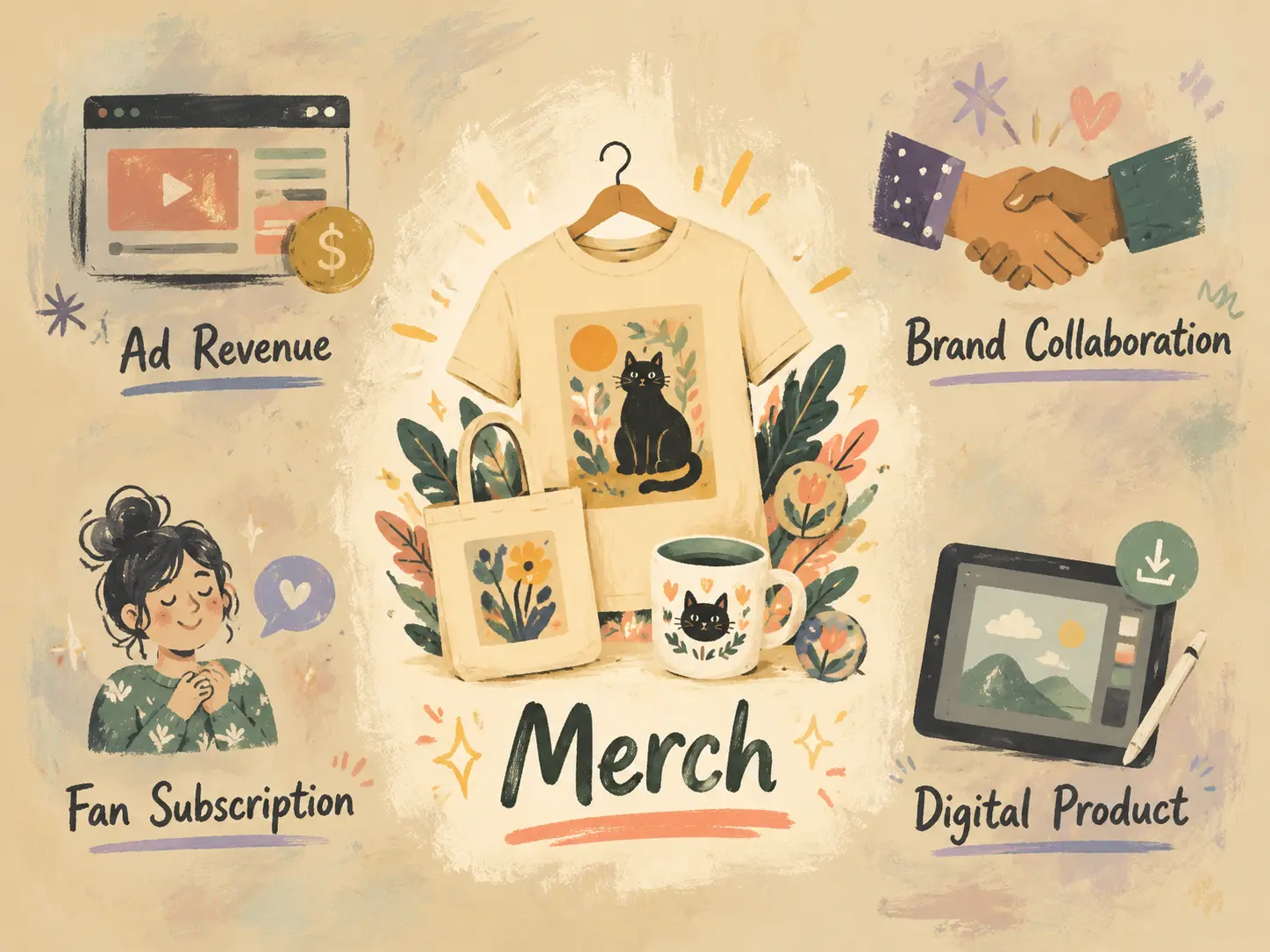
Let's break down the 5 real income streams for creators in 2026, and why one of them is quietly becoming the most profitable (and hands-off) way to turn your creativity into cash.
1. Ad Revenue from Platforms
Getting paid directly by YouTube, TikTok, or Instagram is the most obvious starting point. It’s great to get a paycheck just for posting,
But the reality? It’s highly unpredictable. Unless you're pulling millions of views consistently, ad revenue is pocket change. A creator with 100K subscribers on YouTube might make $500–$2,000/month from ads, which is enough to feel exciting, but not enough to quit your day job. It’s a nice bonus, but rarely enough to build a stable business on its own.
2. Brand Sponsorships and Collaborations
Landing a brand deal is an exciting milestone. You get paid to talk about a product to your audience. A single brand deal can pay $1,000–$10,000+ depending on your niche and reach.
The downside is that sponsorships require constant pitching, negotiating, and dealing with rounds of feedback, then waiting mouths to get paid. Plus, if you do too many, your audience might feel like they are just watching commercials.
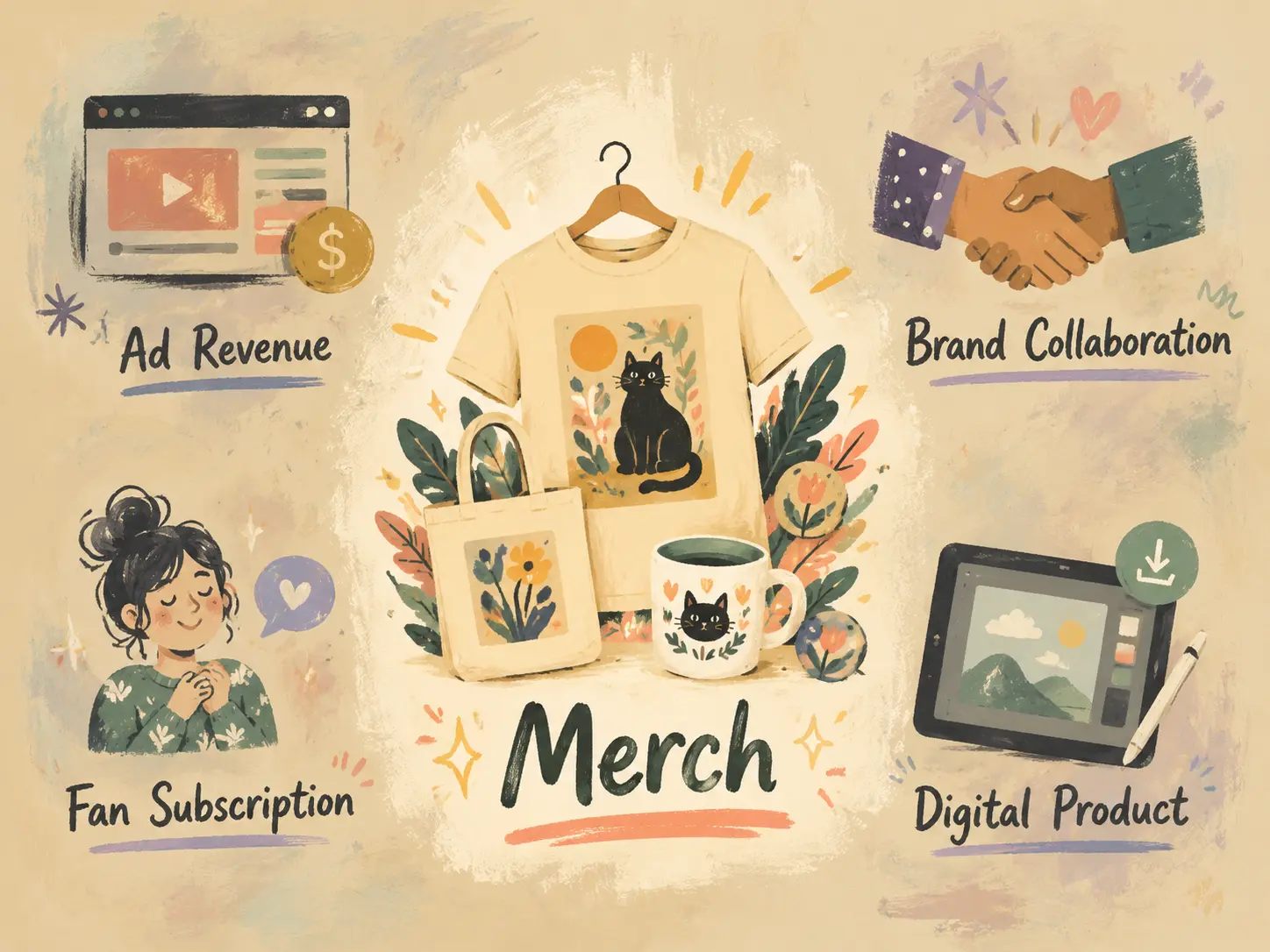
3. Memberships and Fan Subscriptions: Patreon, Ko-fi
Your most loyal fans pay you a monthly subscription for exclusive content, early access, or behind-the-scenes perks. It's certainly a fantastic model. I love this model. It's consistent, predictable income.
However, it often leads to what creators call the "content treadmill." To keep your subscribers happy, you constantly have to produce exclusive, behind-the-scenes content on top of your regular posts. It’s rewarding, but it’s a lot of work and hard to scale.
4. Digital Products: Courses, Presets, Templates
Creating presets, digital brushes, templates, or courses is an excellent way to build passive income for creators. The profit margins are high, and once you make them, they sell forever.
But the barrier to entry is steep. Building a high-quality course or digital tool requires serious upfront investment. It takes weeks or months of unpaid work before you see a single sale. If you have a specific skill people want to learn (Procreate techniques, Lightroom presets, Notion templates), this can be a goldmine.
5. Launching Your Own Merch Brand (The Underrated Winner)
Here's where things get interesting.
For years, selling merch meant ordering 500 t-shirts, storing them in your garage, packing boxes yourself, and praying people actually bought them. It was expensive, risky, and time-consuming.
But now, selling merch without inventory is not only possible. It's one of the smartest ways to monetize, especially if you're an artist, illustrator, or designer with a recognizable style or IP.
Why? Because your audience wants to support you. But not everyone can afford a $200 course or a $10/month Patreon. A $35 T-shirt with your art on it? That's an easy yes.
Merch taps into something sponsorships and ads can't: emotional connection. When someone wears your design, they're literally walking around as a billboard for your brand.
The problem used to be the logistics. Until now.
How I Discovered the Best Print-on-Demand Platform for Creators
A few weeks ago, a friend of mine, a digital illustrator with about 80K Instagram followers, was venting about her merch setup. She was using a traditional print-on-demand service, and it was a nightmare.
Every time she wanted to add a new design to her store, she had to:
- Manually resize her artwork for each product, like t-shirts, mugs, phone cases, tote bags, and so on.
- Upload each variation separately
- Create mockups herself
- Hope the placement looked good when it actually printed
She was spending 10+ hours per design just doing admin work. And when customers had issues? She had to handle all the angry emails.
That's when she received a invitation email from Genki, an automated merch platform. Their team helped her set up the storefront and, to be honest, its convenience truly redefined my understanding of what is possible.
What Makes Genki Different
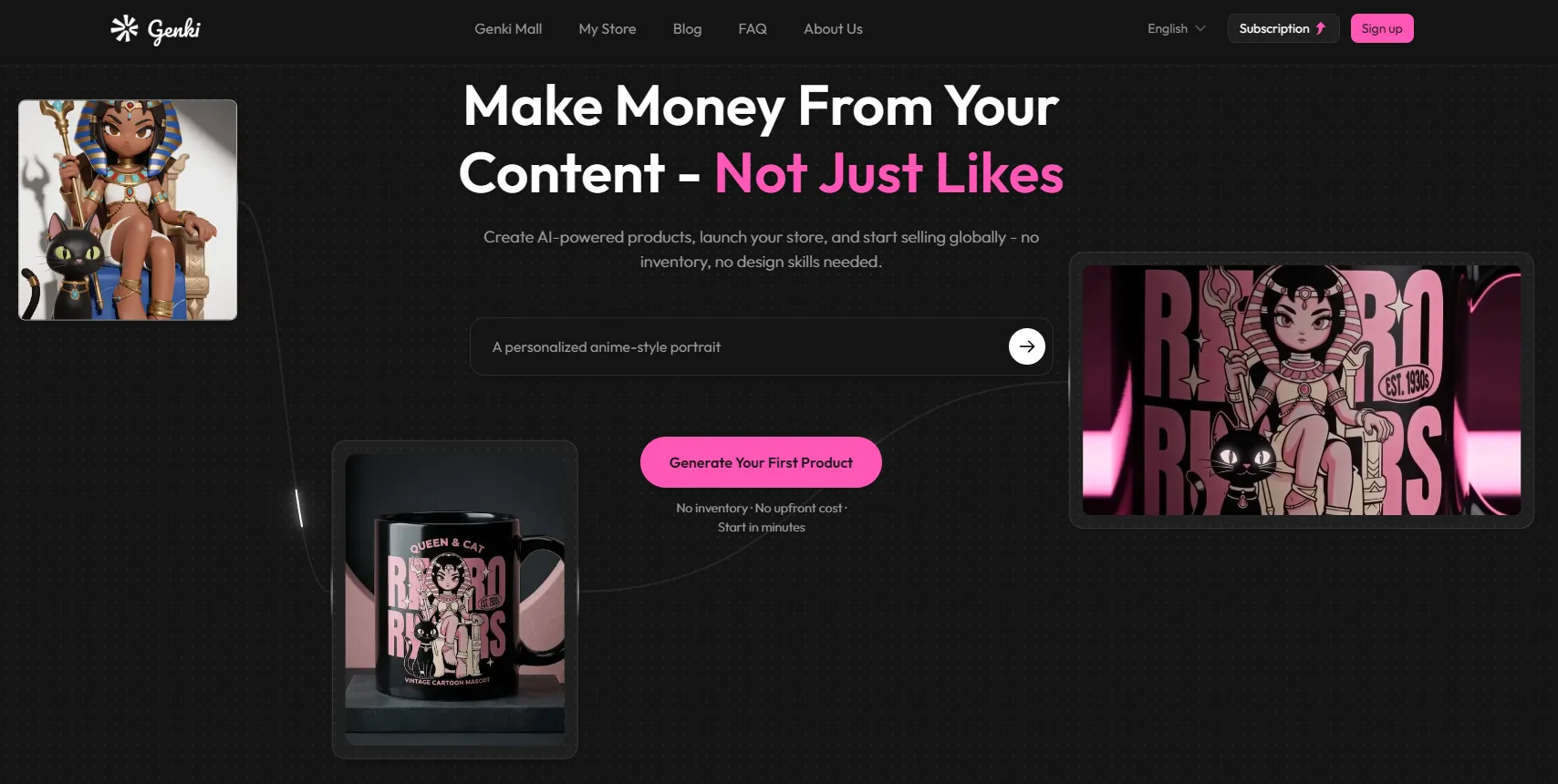
Genki isn't just another print-on-demand platform. It's specifically built for artists, designers, and IP creators who want to sell custom merch without the headache.
I have spent the past week observing my illustrator friend use Genki, and here's how it actually works:
1. Upload Your Art Once, Genki Will Do the Rest
Instead of manually adapting your design to 50 different products, you upload your artwork one time. Genki's AI-powered design engine automatically scales, positions, and optimizes your art for every product type. Apparel, accessories, home goods, you name it.
What used to take 10 hours now takes 10 minutes.
2. Sell Anywhere: Your Store or Theirs
You can launch a free, branded storefront directly on Genki's platform. But here's the kicker: if you already have a shop on Shopify, Etsy, WooCommerce, or another platform, Genki integrates seamlessly.
You can push your auto-generated product designs to your existing store without starting from scratch. This is huge for creators who've already built an audience on a specific platform.
3. Zero Inventory, No Headaches
This is true print-on-demand: Genki only produces products when someone orders. No upfront costs. No unsold inventory gathering dust.
But the real game-changer? They handle everything: production, global shipping, and customer service.
If a package gets lost or a customer wants a different size, Genki handles it. You literally don't have to get into it.
4. Focus on Creating, Not Logistics
My illustrator friend now spends her time making art and posting content, the stuff that actually grows her brand. Her merch store on Genki runs in the background, generating passive income every single day without her lifting a finger.
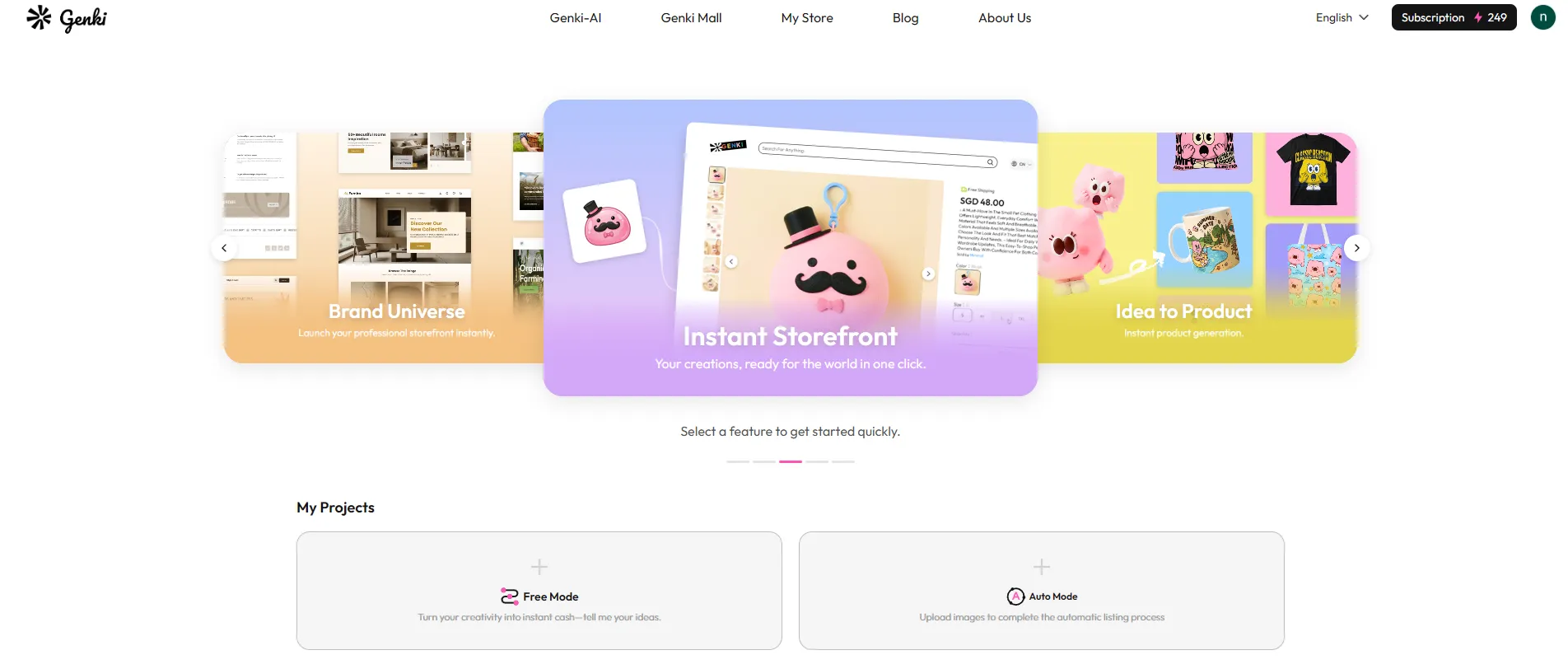
Actually, this friend of mine initially had reservations about using Genki because it describes itself as AI-driven. However, after exploring and familiarizing ourselves with it, we realized it is completely different from the kind of AI that infringes upon intellectual property rights. In reality, what they do is provide creators with intelligent, automated product formatting and a smart supply chain that requires absolutely no effort or concern on their part. I believe this is something truly well worth trying for creators.
Final Thoughts: Build Multiple Streams, But Start with Merch On Genki
Here's my honest advice after watching hundreds of creators build businesses:
Don't rely on one income stream. The smartest creators mix ad revenue, occasional sponsorships, maybe a Patreon, and a merch store. But if you're just starting to monetize your art, merch is the easiest, lowest-risk place to begin, especially with Genki that remove all the friction. You don't need 100K followers. You don't need to be a marketing genius. You just need art that resonates with people and a platform that handles the rest.
So, which income stream are you focusing on right now? Have you tried selling merch yet? Now it's time to take a new step with Genki!
Related readings: